Contact us here to plan your future trip to French Polynesia

Things to Do in Mangareva
& the Gambier Islands —
Top 7 Activities 2026
The Gambier Islands are one of the most preserved and least-known archipelagos in French Polynesia. Located 1,650 km south-east of Tahiti, they cluster around Mangareva — the main island — a constellation of motus, islets and lagoons of untouched beauty. No mass tourism, no overwater bungalows like Bora Bora — just rare authenticity, pristine nature, a fascinating history and Polynesian hospitality at its purest.
Planning a trip to the Gambier means thinking of the archipelago as two distinct worlds. In Mangareva, the heart of the archipelago, you'll find the villages, accommodation, restaurants and water activities. Further out, on peripheral islands like Taravai, Aukena or Akamaru, the atmosphere is even wilder and more isolated — perfect for quiet walks and discovering nature in its most untouched state.
The Gambier Islands — French Polynesia's Best-Kept Secret
The Gambier Islands are the Polynesia that few travellers know — and that's exactly what makes them so special. Far from the usual tourist circuit, 4h30 by plane from Papeete, you land in a world apart. An archipelago where nature is pristine, where the locals show a generosity that's rare, where every morning on the lagoon feels like a discovery.
I've been there and I recommend it without hesitation. This isn't the destination for those looking for organised activities, chef's restaurants or infinity pools — it's the destination for those who want to experience Polynesia at its most authentic. The Saint-Michel Cathedral is worth the trip alone. And if you skip Gambier Pearls in Rikitea, you're missing something truly rare.
Ideal for travellers seeking authenticity, preserved nature, history and absolute tranquillity. Not suited if you want mass-market activities, upscale hotel accommodation or a nightlife scene. This is Polynesia off the beaten track — and that's exactly why we love it.
Mangareva Lagoon & the Gambier Motus
An exceptional, little-known lagoon
Around Mangareva stretches one of the most beautiful lagoons in French Polynesia. Less well-known than the Tuamotu atolls, the Gambier lagoon captivates with its deep blue gradients, deserted motus and peaceful, almost mystical atmosphere. Locals offer boat trips in traditional canoes or pirogues to reach the most spectacular motus: Taravai, Aukena and Akamaru.
On these islets, white sand beaches lined with coconut palms invite you to relax, swim and snorkel in crystal-clear water hosting tropical fish, giant clams and multicoloured corals. Motu Taravai, the largest and most inhabited, shelters a friendly village and the ruins of an old church. Further out, Aukena draws visitors with its immaculate beaches and ancient stone prison, while Akamaru reveals a charming coral church and exceptional panoramic views over the lagoon.
Boat trips to the motus are arranged directly through your guesthouse. Pension Mara'i and Pension Bianca & Benoît both offer lagoon excursions — organise them on arrival. No independent operator to book in advance.
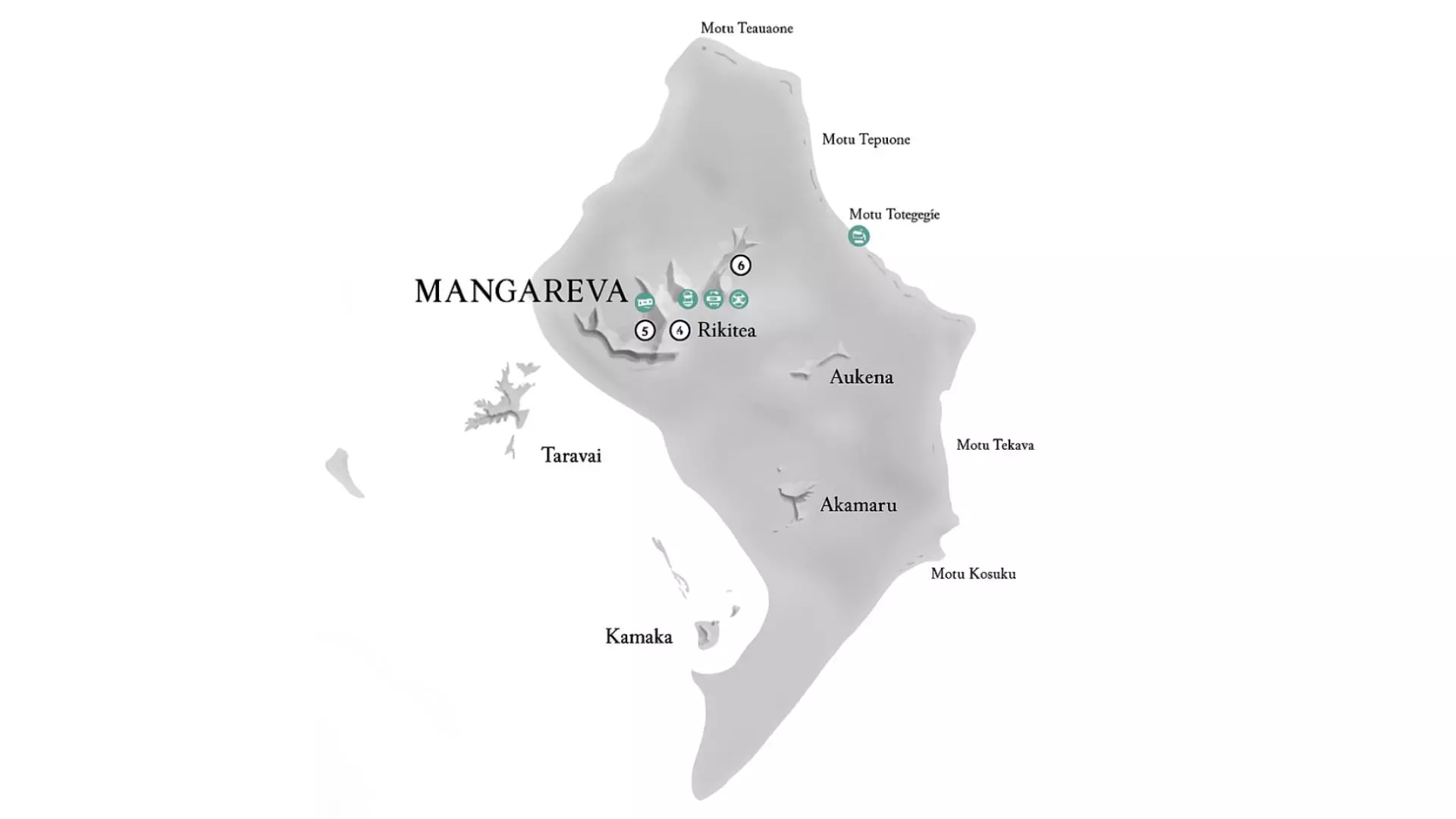
Map of the Gambier archipelago — Mangareva and its motus: Taravai, Aukena, Akamaru.
Mont Duff & Mont Mokoto — Best Panoramas in the Gambier Islands
Mont Duff — 441m, 3.3 km, 2h return
Mont Duff is the unmissable hike on Mangareva. The island's highest point at 441 metres, it offers a 360° panoramic view over the entire lagoon, the motus of Taravai, Aukena, Akamaru and the coral reef encircling the archipelago. The trail starts near Rikitea and winds through lush tropical forest — wild hibiscus, tree ferns, guava trees.
Key facts: 3.3 km return, +350m elevation gain, about 2 hours return. Medium difficulty, accessible without a guide for those in good physical shape. Bring water, hiking shoes and set off early morning to avoid the heat.
Mont Mokoto — tranquillity and views over an endless ocean
Mont Mokoto, slightly lower but equally spectacular, appeals to hikers looking for peace and quiet. Less visited, its trail winds through wooded sections and open ridges, ideal for spotting endemic birds and tropical plants. At the summit, the silence and the view over the infinite ocean offer a suspended moment — the genuine feeling of being alone at the edge of the world.
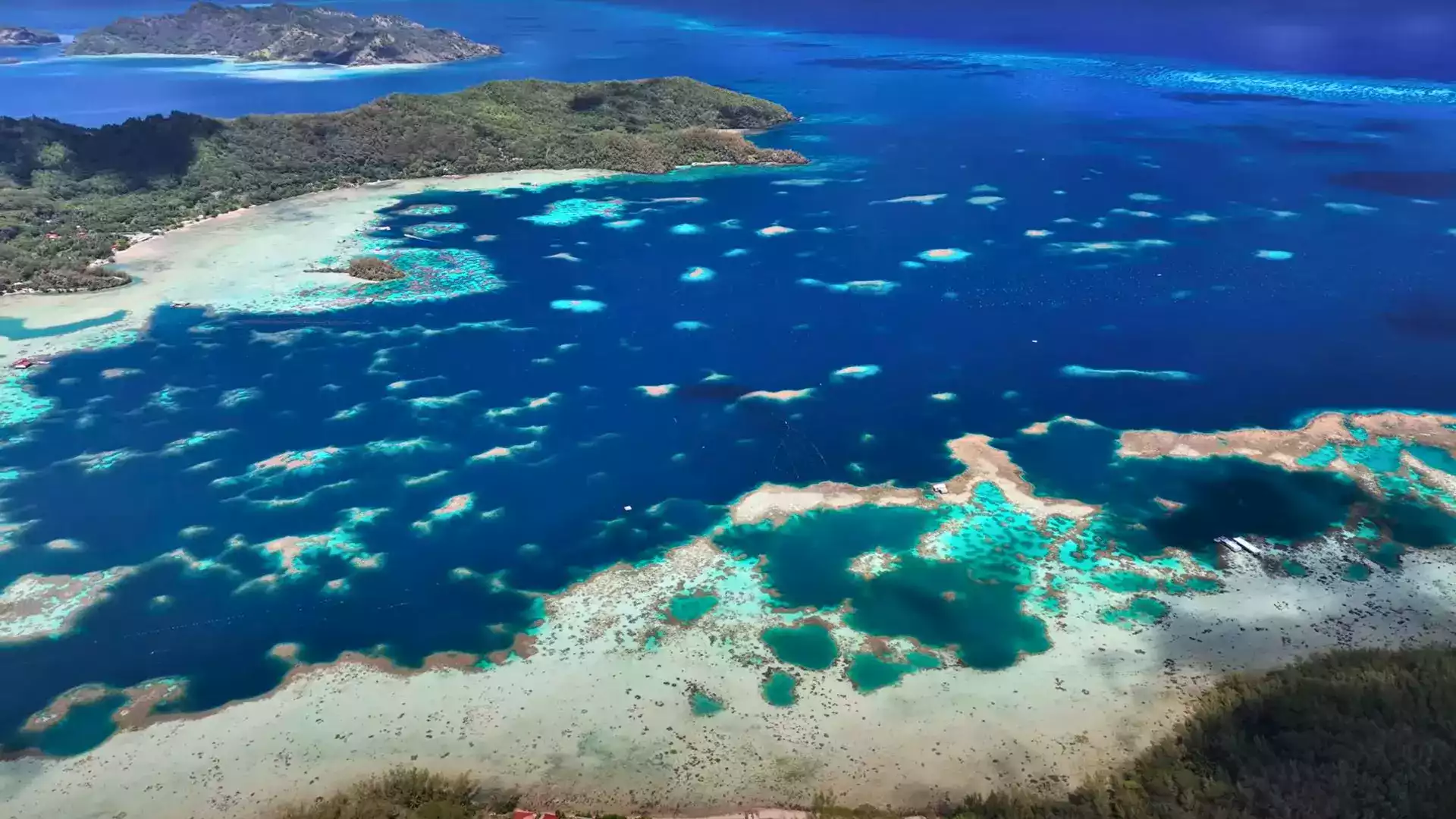
View from the heights of Mangareva — the Gambier lagoon and its motus stretching to the horizon.
Local Life & Traditions in Rikitea
The living heart of the Gambier Islands
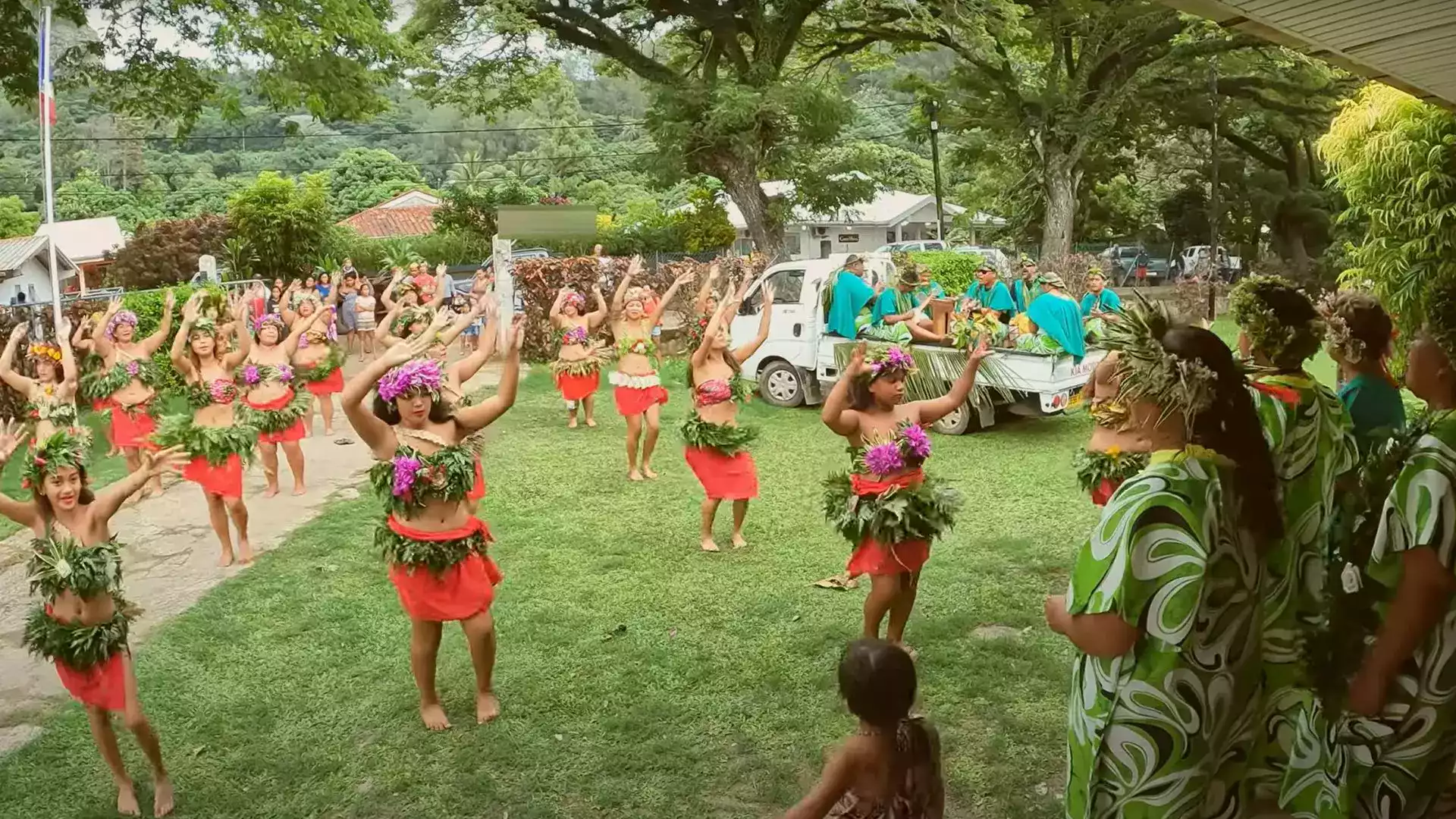
The beating heart of the Gambier Islands, the village of Rikitea embodies the gentleness and authenticity of Polynesian life. Colourful houses, flowering gardens, peaceful atmosphere — this small port nestled between mountain and lagoon is far more than a stopover. Each morning, the local market slowly comes to life: sun-drenched tropical fruits, fresh fish caught in the lagoon, handicrafts, and sometimes raw pearls sold directly by pearl-farming families.
Craftwork plays an important role: women weave pandanus to make hats, mats and baskets, while others carve mother-of-pearl. These skills, passed down with pride, help preserve the cultural identity of the Gambier. Wandering through Rikitea's calm streets is to feel that intimate connection between people and nature.
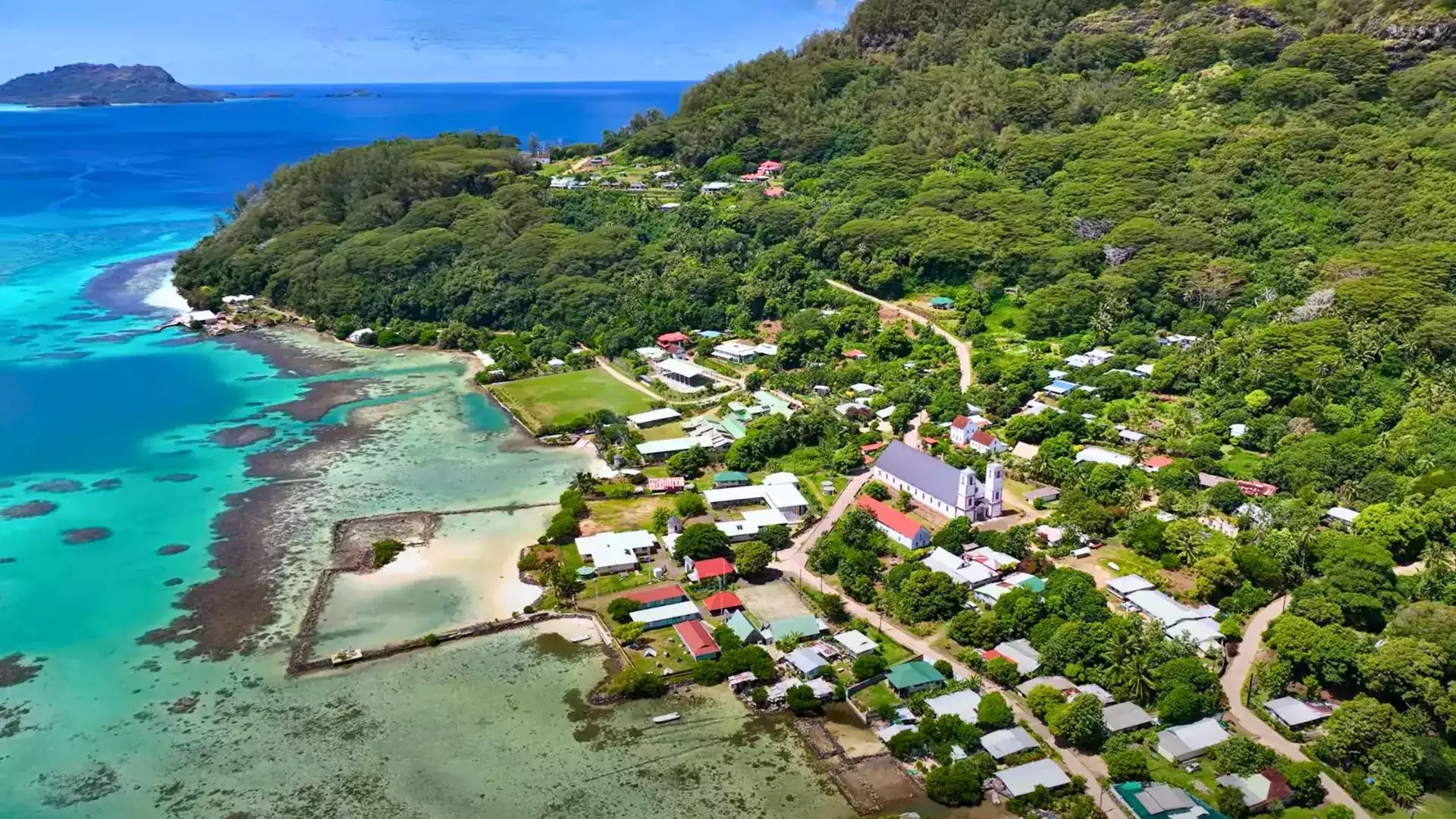
Rikitea — Mangareva's main village, dominated by the silhouette of Saint-Michel Cathedral.
Saint-Michel Cathedral in Rikitea
A masterpiece in coral at the heart of the Pacific
Built between 1839 and 1841 by Catholic missionaries, Saint-Michel Cathedral is one of the most impressive monuments in all of French Polynesia. Constructed from locally quarried coral and basalt blocks, its imposing facade flanked by two symmetrical towers testifies to the ambition and craftsmanship of its builders. Inside, the mother-of-pearl choir is a unique artisanal masterpiece — shimmering in the natural light.
Saint-Michel Cathedral is not merely a place of worship: it's a symbol of faith and cultural mixing between Polynesian traditions and Western influence. Around the village, you'll also discover the ruins of the seminary, convent and former missionary schools.
If you're there on a Sunday, attend mass in the cathedral. The polyphonic singing of the congregation echoes through the coral vaulting — a rare, deeply moving moment that stays with you long after you leave.
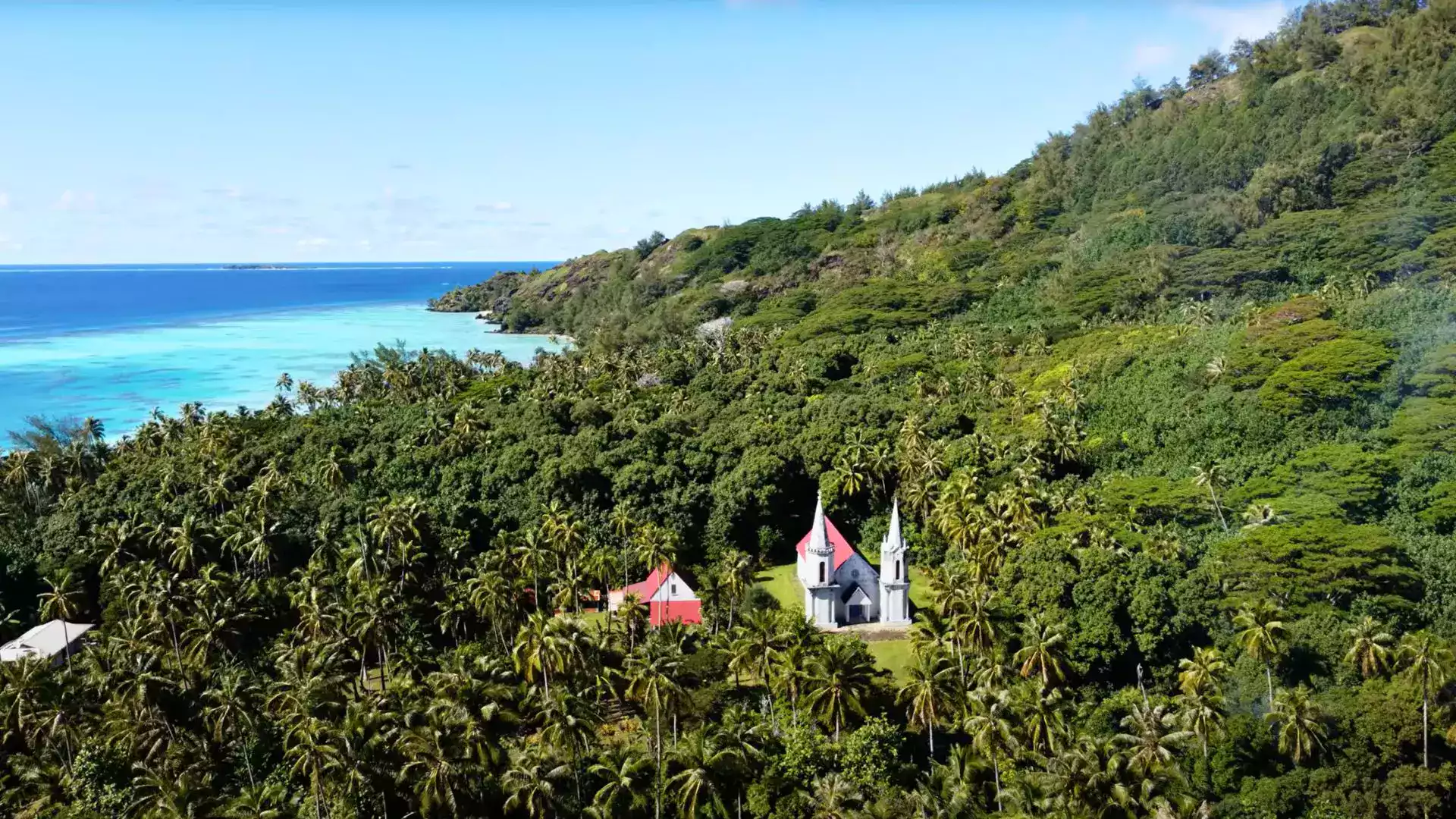
Saint-Michel Cathedral in Rikitea — built from coral and basalt between 1839 and 1841.
Pearl Culture in the Gambier — Gambier Pearls in Rikitea
The Gambier: birthplace of the Tahitian black pearl
The Gambier Islands are considered one of the birthplaces of the Tahitian black pearl — the first pearl farms were established here in the 1960s. Mangareva's lagoon, rich in nutrients and largely unpolluted, provides ideal conditions for pearls of exceptional quality: their iridescent reflections range from silver-grey to peacock green, sometimes tinged with blue or aubergine.
At Gambier Pearls, the pearl farm in Rikitea, you can visit and understand the full process: the delicate grafting, growth on culture lines, harvest and sorting by lustre, shape and colour. It's also the opportunity to buy pearls directly at the source — jewellery of rare quality, at prices far more interesting than in Papeete.
Visit Gambier Pearls in Rikitea — the Gambier's pearls are among the finest in French Polynesia, and buying directly from the farm guarantees authenticity and fair price. A meaningful souvenir to bring home.
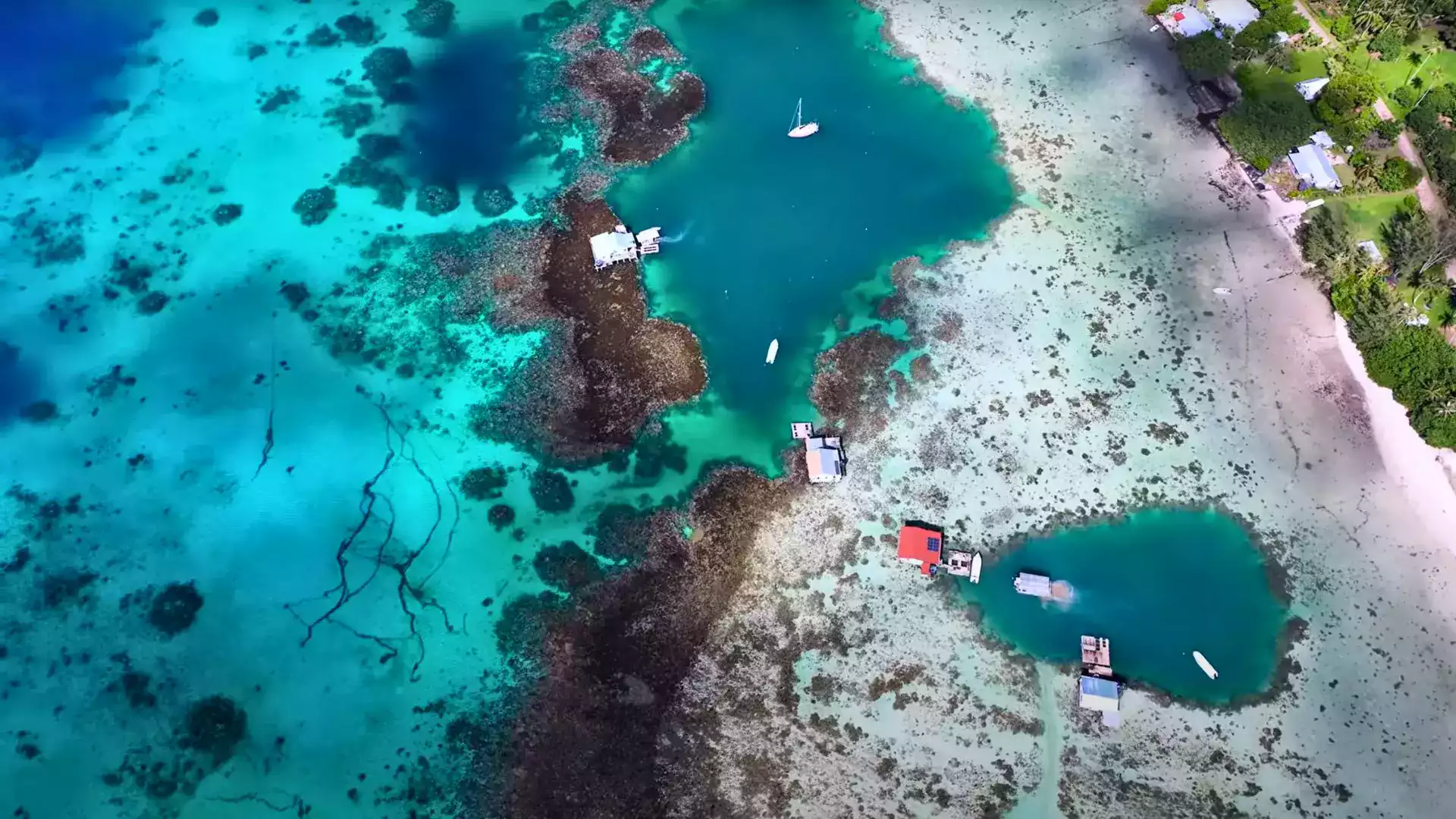
Gambier Pearls in Rikitea — exceptional black pearls produced in the Gambier's preserved lagoon.
Complete guide How to Choose a Tahitian Black Pearl Everything you need to know to buy a black pearl directly in the Gambier Islands.Missionary Heritage — An Open-Air Museum
The first Catholic mission in Polynesia
The Gambier Islands are a genuine open-air museum of Polynesian religious heritage. In the 19th century, it was here in Mangareva that Catholic missionaries established the first mission in Polynesia, permanently transforming the local culture and landscape. The ruins are still visible everywhere: coral-stone churches, convents, old colleges, presbyteries and workshops.
Among the most striking sites: the ruins of the Saint-Raphaël seminary and the Rouru convent in Rikitea, sometimes swallowed by vegetation. On Akamaru, the Notre-Dame de la Paix church (opened in 1831) remains a jewel facing the lagoon. On Taravai, the Saint-Gabriel church impresses with its twin bell towers and mother-of-pearl décor.
Missionary ruins in the Gambier Islands — unique religious heritage in French Polynesia.
Gambier Honey — The Purest Nectar in French Polynesia
A rare artisanal honey
Among the Gambier's natural riches, local honey holds a special place. Produced in small quantities by a handful of local families, it is considered one of the purest honeys in all of French Polynesia. The hives placed on the verdant heights of Mangareva benefit from a completely preserved environment, free from pollution and pesticides.
The bees forage on endemic and tropical flora — citrus flowers, hibiscus, uru (breadfruit tree), eucalyptus and coconut palms — giving the honey a delicate, floral, slightly vanilla taste. This rare product is often sold directly on site or at markets in Tahiti. A source of local pride, symbolising the balance between preserved nature and local craftsmanship.
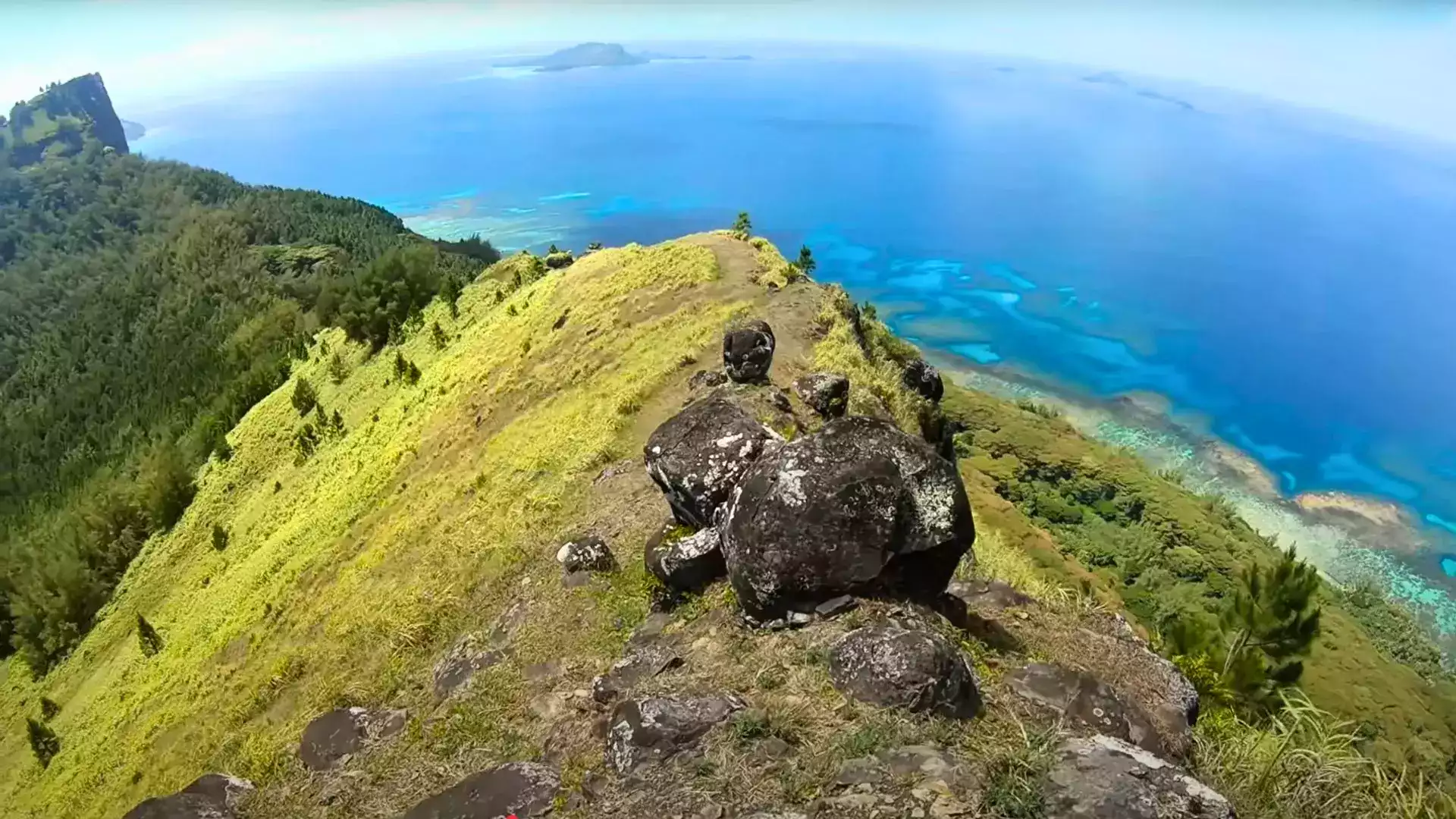
The heights of Mangareva — where hives produce the purest honey in French Polynesia.
Practical Info — Gambier Islands & Mangareva
Mangareva flights — how to get there
Air Tahiti operates direct flights from Faa'a Airport (Papeete) to Mangareva Airport. The crossing takes approximately 4h30 and offers spectacular views over the Pacific Ocean. Flights are regular but limited — approximately 2 per week — so booking well in advance is strongly recommended.
With only 2 flights per week, seats are limited. Book as soon as your dates are confirmed — Gambier flights fill up, especially in high season. Plan on at least 1 week on the island to make the most of the archipelago.
Where to stay in Mangareva — Gambier Islands hotels & guesthouses
There are no hotels in the Gambier Islands — accommodation is exclusively in family-run guesthouses, typically on a half-board or full-board basis.
- Pension Mara'i — our visited address, highly recommended. Warm welcome, authentic immersion, lagoon excursions organised on site. Our top pick.
- Pension Bianca & Benoît — also excellent, well-regarded for quality of welcome and lagoon trips. A reliable choice in the Gambier.
When to visit the Gambier Islands
The Gambier enjoy a pleasant climate year-round. The dry season (May to October) is generally preferred for its milder temperatures and lower rainfall — ideal for hiking and boat excursions.
Flights & transport Getting Around French Polynesia — Inter-Island Guide Everything about inter-island flights and transport to organise your Gambier trip from Papeete. Plan your trip Best Travel Agencies in French Polynesia Local agencies to integrate the Gambier Islands into a tailor-made French Polynesia itinerary.FAQ — Mangareva & Gambier Islands
Explore Authentic French Polynesia
Austral Islands · Whales Rurutu — Complete Guide The whale island of the Australs — wild nature and preserved traditions. Marquesas Islands Nuku Hiva — Complete Guide The Marquesas capital — waterfalls, archaeological sites, wild nature. Cruise · Atolls Catamaran Cruise in the Tuamotu Explore the Tuamotu atolls by catamaran — turquoise lagoons and deserted motus. Private atoll · Day trip Tetiaroa — Things to Do on Marlon Brando's Atoll Another secret gem of French Polynesia — pristine lagoon, bird island, snorkeling.