Contact us here to plan your future trip to French Polynesia

Mataiva Island — Top 7 Things to Do &
Complete Guide 2026
Mataiva is located 300 km north of Tahiti and 39 km west of Tikehau, its closest neighbour. Its blue-green lagoon opens onto the ocean through one pass and eight hoa (channels) — hence its name: Mata Hiva, "the nine eyes". The atoll stretches 10 km long by 5.5 km wide and rests on the summit of a 2,900-metre underwater volcano formed over 64 million years ago. Its lagoon is composed of 70 basins around 8 metres deep, separated by natural coral formations — a mosaic of greens and blues found nowhere else on earth.
Only 297 inhabitants, two family pensions, two flights a week — Mataiva is one of the most preserved and least visited atolls in French Polynesia. Most travellers who come here are locals. Very few of our clients choose Mataiva — and that's a shame, because in terms of scenery, lagoon beauty and authentic experience, it's exceptional. Far more off the beaten track than Rangiroa or Fakarava, which have become quite touristy. Mataiva, like Tikehau, belongs to a different category — that of the real Polynesia.
Mataiva, jewel of the Tuamotu — discover the atoll of the nine eyes with MyLittlePolynesia.
Mataiva — the Tuamotu's Best-Kept Secret
Mataiva is the real Polynesia — the kind you look for and find less and less elsewhere. An atoll completely off the beaten track, ultra-authentic, where the vast majority of visitors are Polynesian locals. Very few of our clients choose Mataiva — and yet those who go come back with stars in their eyes. In terms of scenery, lagoon beauty and human experience, it's exceptional.
The lagoon channels are absolutely fascinating — those turquoise basins that follow one after another, the coral formations that structure the water into a unique mosaic. On the water, it's an intimate experience, without crowds, without noise. Mataiva is not an atoll for advanced divers — corals are limited. But for those who want to experience preserved Polynesia, far from the usual tourist circuit — it's incomparable.
Mataiva is for you if you want a preserved, little-known, low-tourism atoll with authentic cultural immersion. Rangiroa and Fakarava have become quite touristy — Mataiva and Tikehau remain in a different category of authenticity. Not the right choice if you want advanced diving or hotel comfort. For those who want Polynesia as it used to be, far from the crowds — Mataiva is incomparable.
Mataiva — Geography, History & Culture
Extraordinary geology
Mataiva rests on the summit of an underwater volcano rising 2,900 metres from the ocean floor, formed 64 to 66 million years ago. This volcanic base has generated over millions of years a coral formation of just a few metres — the current atoll — with a geography found nowhere else. 10 km long, 5.5 km wide, 16 km² of emerged land, and this reticulated lagoon in 70 basins that exists nowhere else on earth.
The name Mataiva — "the nine eyes"
Mata Hiva means "the nine eyes" — referring to the nine openings connecting the lagoon to the ocean: one main pass to the northwest and eight hoa (channels) to the southeast. These channels are the living arteries of the atoll, regulating the water and giving Mataiva its unique geography. Mataiva belongs to the Mikiroa cultural area, which includes Rangiroa, Tikehau, Arutua, Apataki, Kaukura and Makatea.
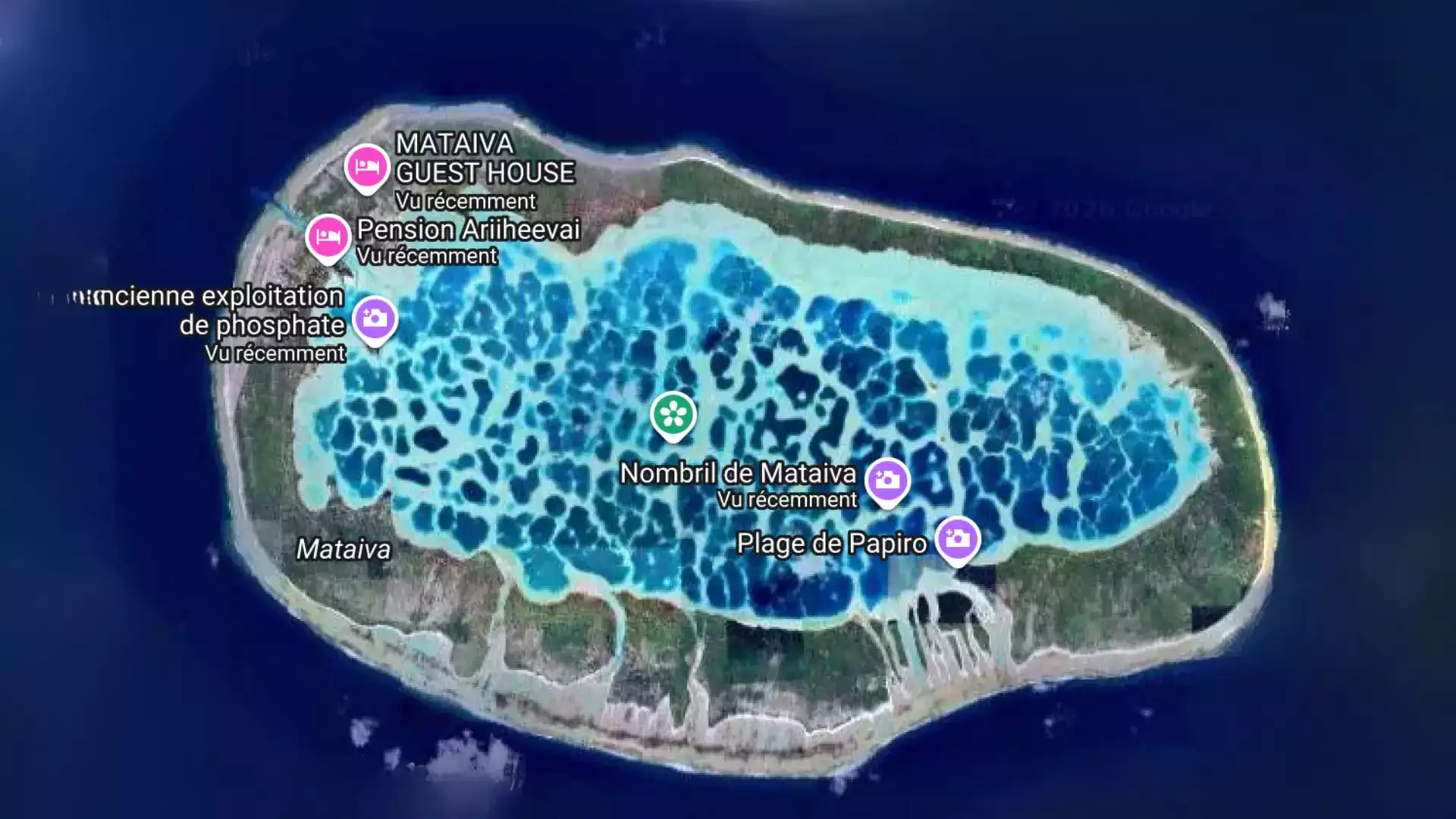
Map of Mataiva atoll — 10 km long, 9 passes, reticulated lagoon in 70 basins.
A history defined by resilience
Mataiva's history is one of an atoll that has weathered wars, cyclones and industrial pressure — and resisted every time. The population was almost completely wiped out in the early 18th century during wars with Anaa. The cyclones of 1878, 1903 and 1906 caused many casualties. The atoll was only permanently resettled in the second half of the 20th century, primarily by families from Tikehau.
More recently, the inhabitants resisted industrial companies wishing to mine the island's significant phosphate deposits. A trial extraction was conducted for eighteen months — abandoned as ecologically inconclusive. The inhabitants preserved their atoll. They continue to do so — limiting fish exports to Tahiti to protect the lagoon's resources.
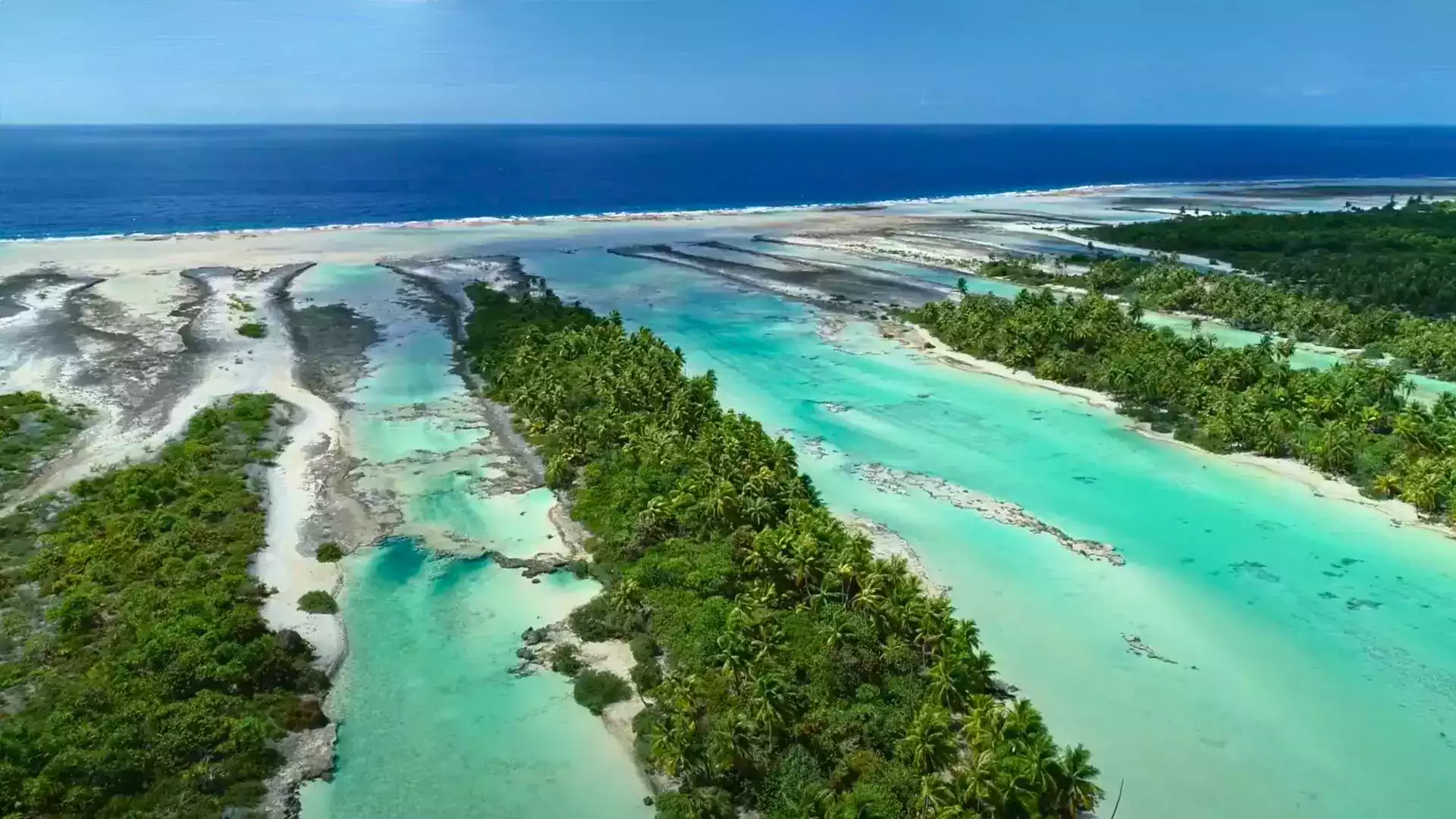
Mataiva — the atoll of the nine eyes, one of the most preserved jewels of the Tuamotu.
Lagoon Excursion — Mataiva's 70 Reticulated Basins
The reticulated lagoon — a mosaic found nowhere else
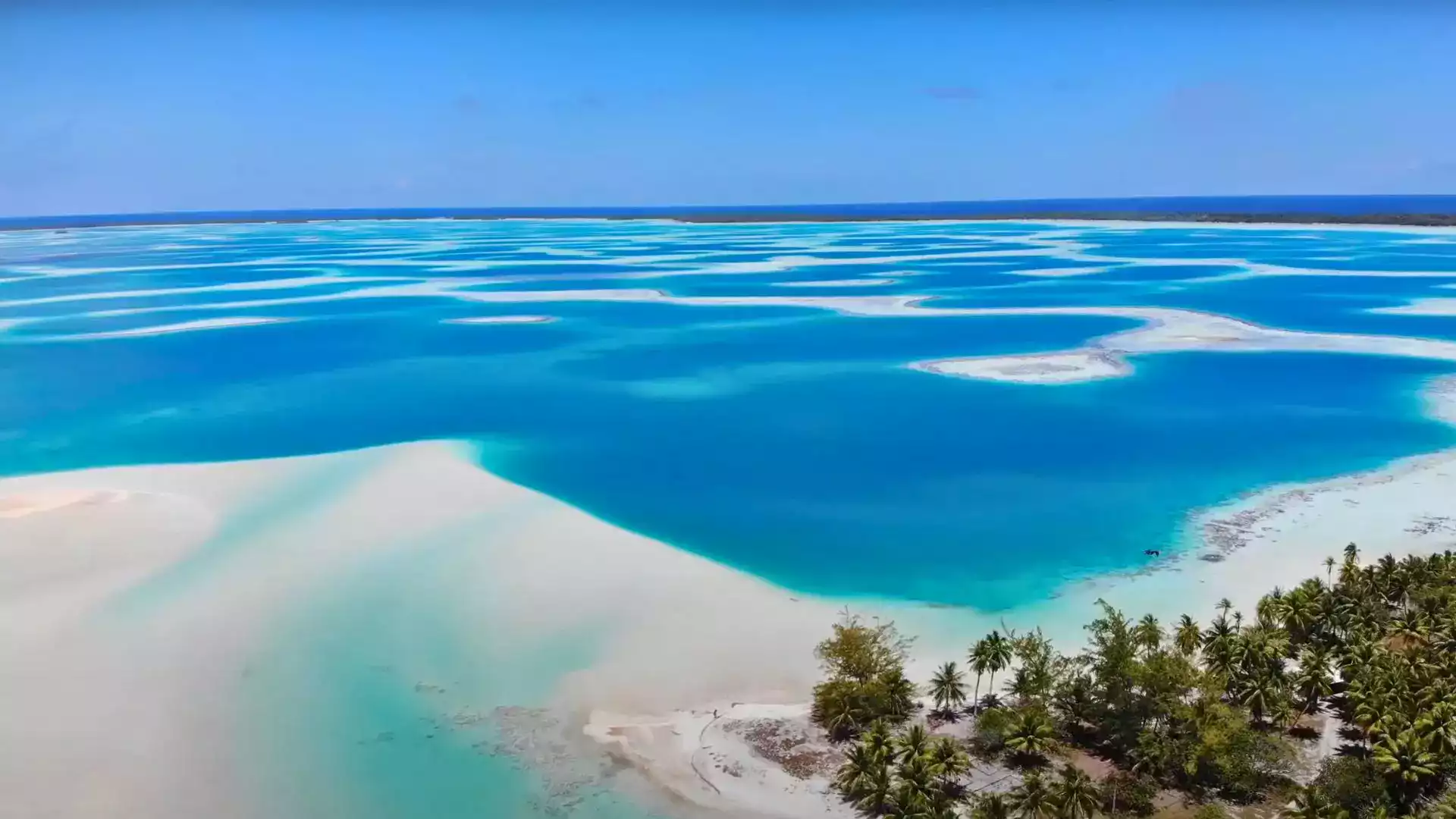
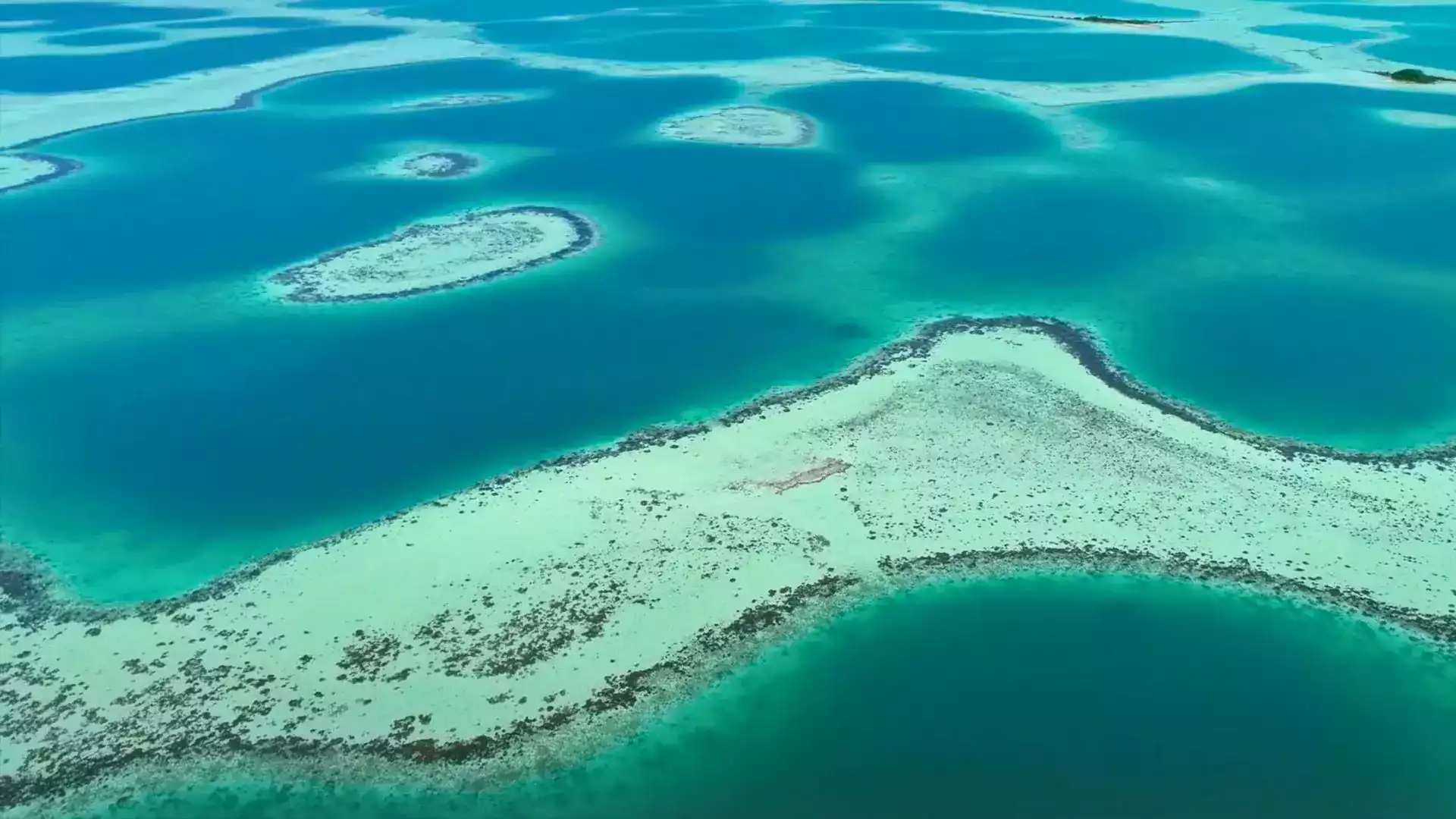
Mataiva's lagoon has one absolutely unique feature — it is reticulated: composed of 70 shallow basins around 8 metres deep, separated by networks of natural coral formations. From the air, it's a mosaic of greens, turquoises and blues that exists nowhere else in Polynesia — or anywhere in the world. On the water, the varying shades and absolute transparency make you want to jump in at every moment.
The boat excursion on the lagoon is the highlight of any stay. You navigate between the basins, stop at the nombril de Mataiva (a flat rock in the middle of the atoll), swim in water of total purity. Snorkeling from the boat is excellent — impressive quantities of fish, rays, blacktip reef sharks in the channels, and sometimes even manta rays making a surprise appearance. No diving equipment needed: mask and snorkel are enough to see all this marine life in shallow, crystal-clear water.
You then visit the fish parks — traditional enclosures where families sustainably raise lagoon fish. The guide takes the lunch directly from there. On the menu: fresh grilled fish, local lobster, coconut bread. An unforgettable lunch on a deserted motu, feet in the turquoise water. Mataiva is well known for its lobsters — the atoll is full of them, and the pensions serve them regularly depending on the day's catch.
The lagoon excursion is included in the all-inclusive package of both pensions. No separate booking needed — the pension organises everything with their boats and local guides.
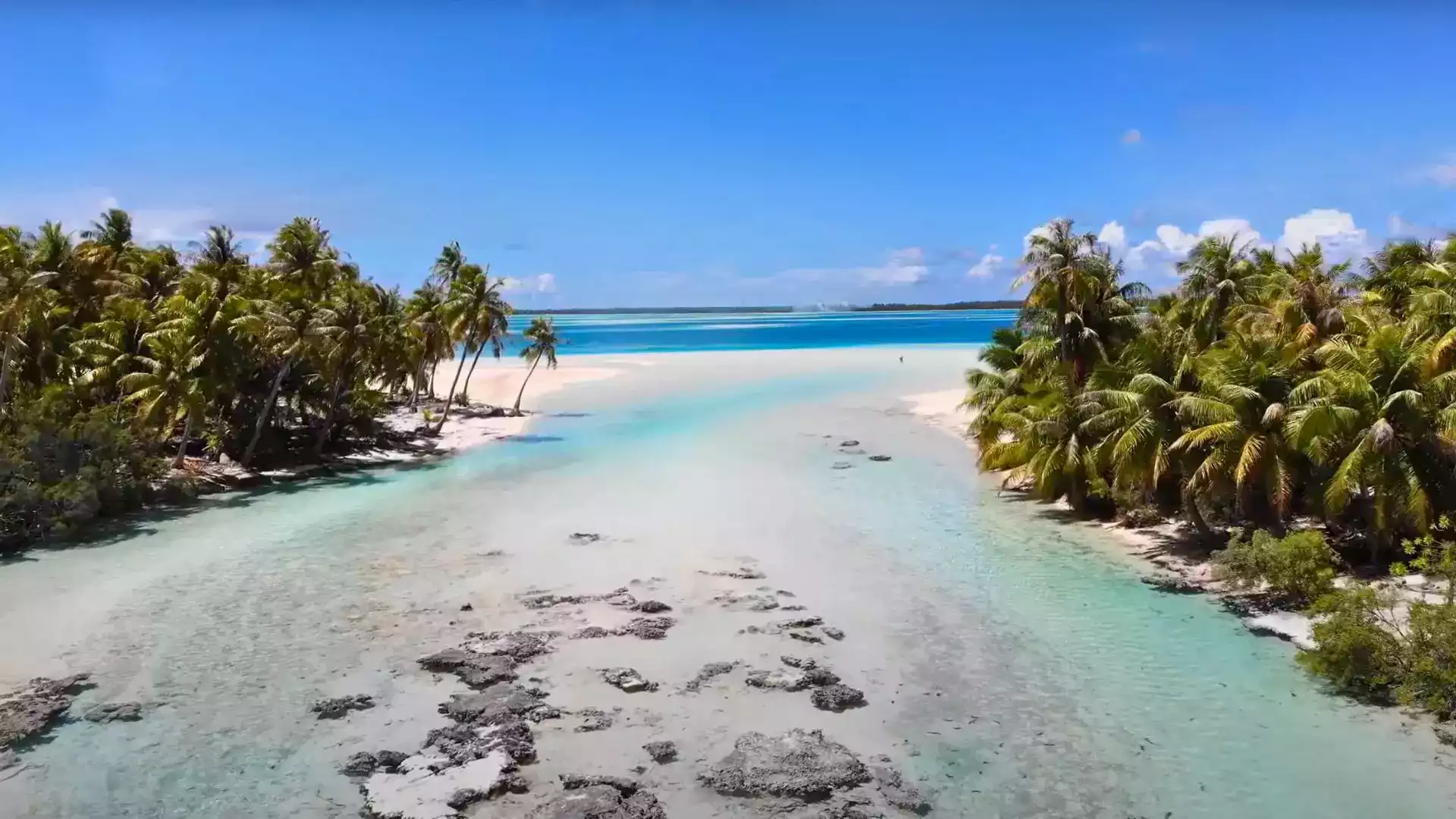
Mataiva's reticulated lagoon — 70 turquoise basins, unique in the world.
4x4 Island Tour — Mataiva from Pass to Beach
The atoll circuit by pick-up — coconut groves, lagoon and pass
The tour of Mataiva is done by 4x4 or pick-up from the pension. You drive along the lagoon through coconut groves, reach the hoa (channels between motus) for a swim, observe fish in water of absolute clarity (flute fish, Picasso fish, surgeonfish, boxfish, damselfish…), then drive along the ocean to reach the most wild beaches on the atoll.
On the way back, a stop at the turtle rock and, if the season allows, the pink sand beach on the ocean side — an absolutely stunning stretch of untouched nature. Half a day that gives you a complete picture of this atoll's unique geography.
The village of Pahua is built on two motus either side of the atoll's only main pass. The bridge connecting the two shores measures 120 metres — the longest bridge in all of French Polynesia. A detail that captures the isolation and originality of this atoll.
Mataiva atoll tour — coconut groves, channels and white sand beaches.
The Nombril de Mataiva & the Turtle Rock
The nombril — Mataiva Papa
In the middle of Mataiva's lagoon sits a flat rock that locals call Mataiva Papa — the island's navel (nombril). Resting there between the turquoise basins, like the geographical and symbolic centre of the atoll. You step onto it during boat excursions — and you understand why the inhabitants consider it a special place, charged with a particular energy.
The turtle rock
On the island tour, you pass in front of a mushroom-shaped coral reef block about 2.3 metres high — the turtle rock. Its shape resembles a sea turtle, and local tradition says that when a cloud of this same shape appears in the sky, turtles will come to lay eggs on the beach that same night. A place steeped in Polynesian legend and symbolism.
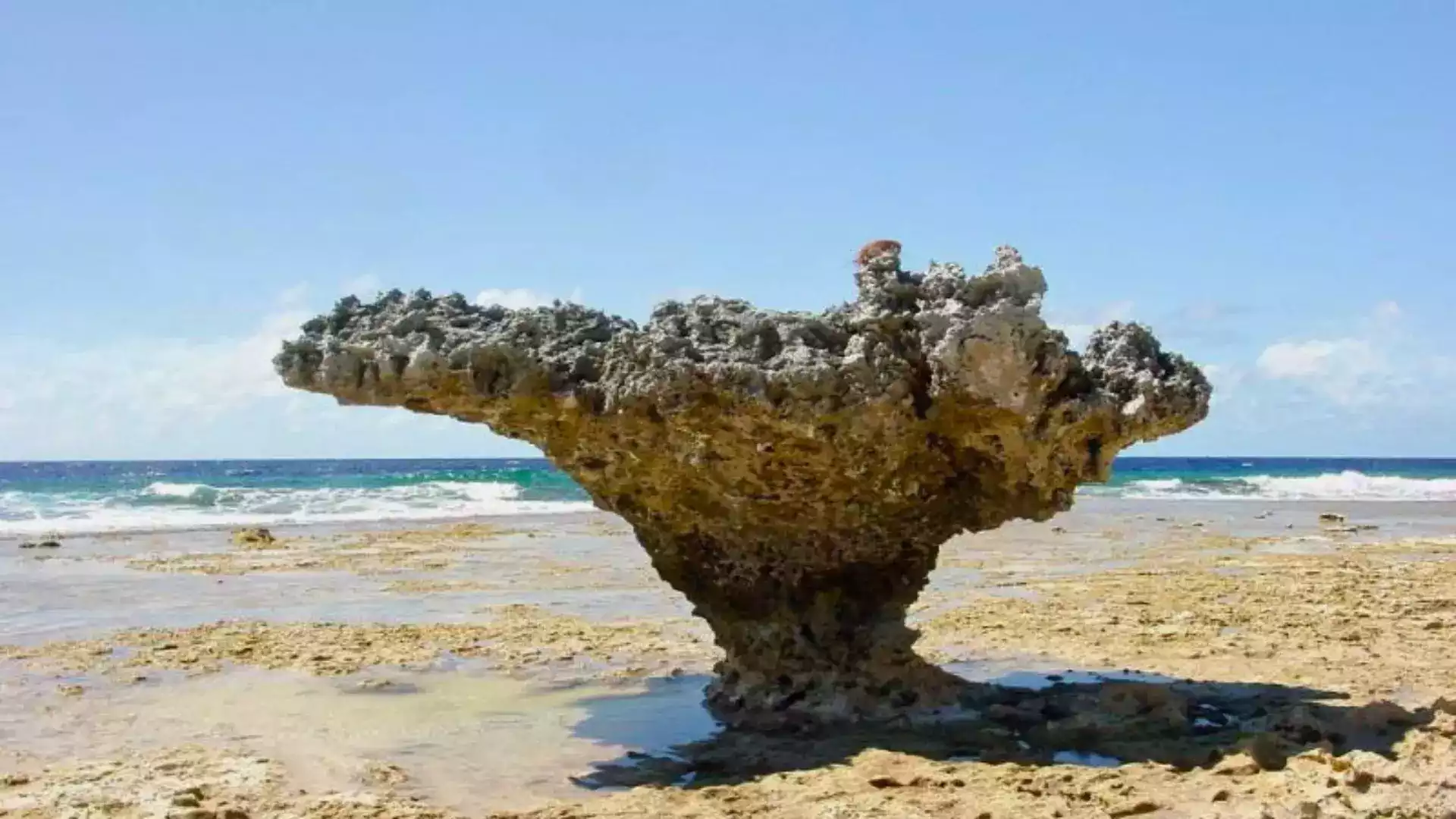
The turtle rock of Mataiva — a 2.3m coral block steeped in Polynesian legend.
Marae Papiro & King Tu Paure's Throne
The throne of Tu Paure — Mataiva's legendary king
During the lagoon and channel day, you stop at the throne of Tu Paure, the legendary king of Mataiva. This archaeological site sits beside one of the channels — a place of Polynesian memory steeped in history, visited as part of the excursions organised by the pensions.
Marae Papiro
Marae Papiro is Mataiva's ceremonial site — a sacred space of Polynesian tradition, used for rituals, ceremonies and gatherings. Pension guides include it in the island discovery programme. An essential stop for understanding the history and culture of this little-visited atoll.
Mata Hiva means "the nine eyes" — referring to the nine openings connecting the lagoon to the ocean: one main pass and eight hoa (channels). These channels are the living arteries of the atoll, regulating its water and creating its unique marine ecosystem.
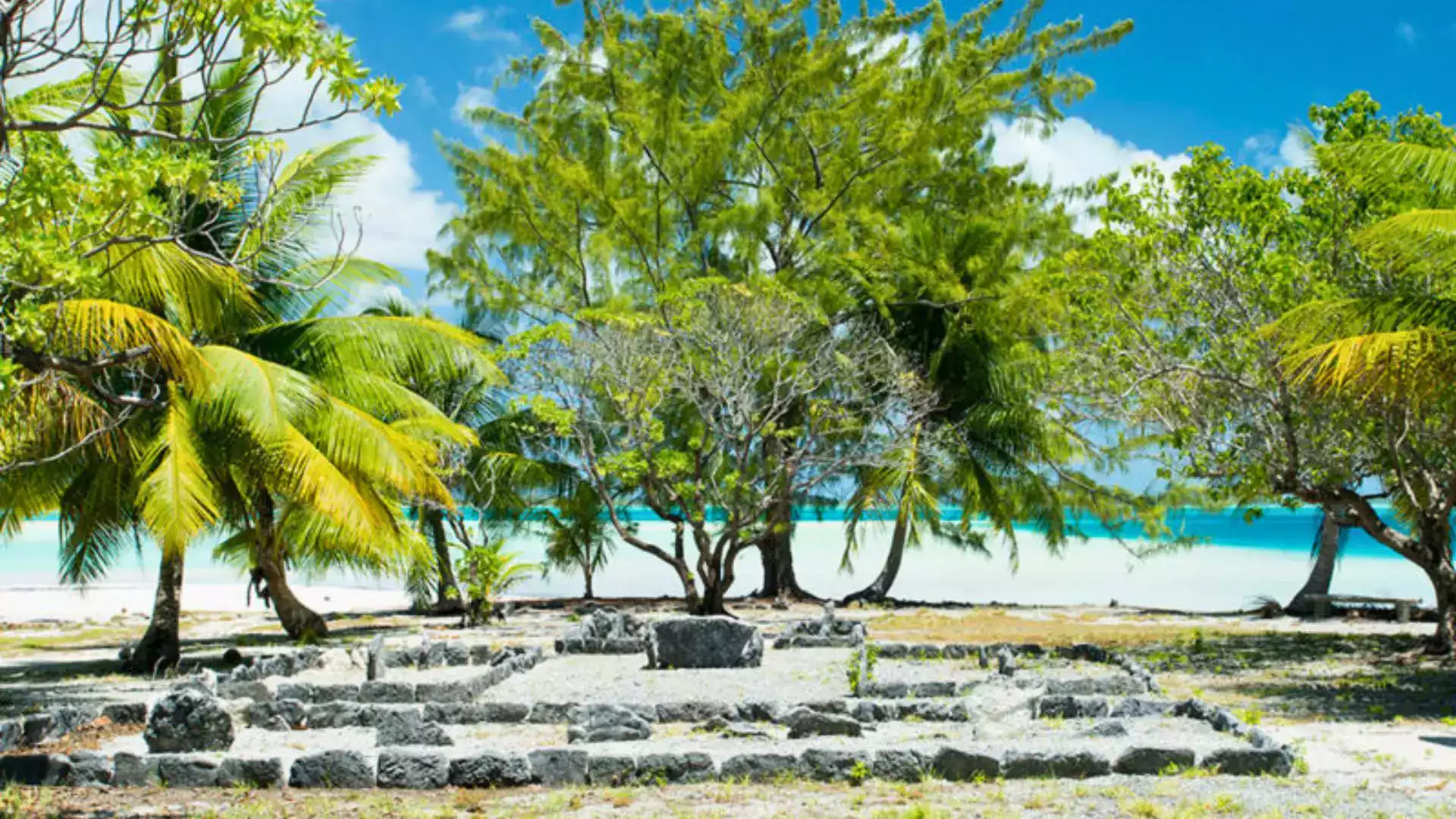
Marae Papiro of Mataiva — Polynesian ceremonial site, witness to the atoll's ancient history.
Mataiva's Natural Pool — the Former Phosphate Quarry
A refreshing swim in a one-of-a-kind setting
One of Mataiva's most unusual activities is the visit to the natural pool — the remains of a former phosphate quarry that was operated for eighteen months before being abandoned due to poor ecological results. Since then, nature has reclaimed the space and the large water basin offers a unique and refreshing swimming spot.
This site also testifies to an important chapter of Mataiva's history: the inhabitants' resistance to the industrial companies that wanted to mine the island's phosphate reserves. The locals succeeded in preserving their atoll — and this natural pool is, in a way, the symbol of that victory.
Mataiva natural pool — former phosphate quarry, now a unique and tranquil swimming spot.
Diving in Mataiva — Mataiva Plongée
An honest take on diving in Mataiva
A diving club recently opened on Mataiva: Mataiva Plongée. You'll see all kinds of fish, sea urchins, moray eels, and with luck a ray. But honesty is important: Mataiva's seabed lacks corals and doesn't offer fish the density of food found in other atolls. This is not Fakarava or Rangiroa for diving.
That said, if you want to discover a human-scale atoll, preserved from human impact, with paradisiacal scenery — you'll be fully served. Diving in Mataiva is an intimate experience in a preserved environment, not a large-scale biodiversity spectacle.
If diving is your main priority, choose Rangiroa or Fakarava. If you want to combine diving + authentic atoll + total disconnection, Mataiva complements a Tuamotu circuit perfectly.
Weaving, Coconut Bread & Local Life — the Soul of Mataiva
Cultural activities — what makes Mataiva truly different
What makes Mataiva genuinely different from other Tuamotu atolls is the cultural immersion the pensions include in their all-inclusive package:
- Plate and hat weaving — introduction to Polynesian basketry, a technique passed down through generations in Mataiva.
- Shell necklace making — local craft, an authentic souvenir to take home.
- Coconut bread (ipo) — artisanal bread cooked on the barbecue with grated coconut. Best enjoyed on a hoa facing the lagoon with grilled fish — Polynesian food at its most pure.
- Coconut processing demonstration — introduction to traditional copra techniques.
- Fish parks visit — traditional enclosures where families sustainably raise and fish. The guide takes lunch directly from there.
- Pahua village walk — Mataiva's only village, on two motus either side of the pass. 297 inhabitants, a grocery store, an atmosphere out of time.
The ipo is the taste memory of Mataiva. This artisanal coconut bread, grilled on a barbecue on a hoa, with freshly caught fish — simple, delicious, deeply rooted in Polynesian tradition. A convivial and unforgettable moment.
Fishing with a Local — Pure Authenticity
Fishing alongside a Mataiva resident
Mataiva is one of the rare atolls in Polynesia where you can go fishing with a real local fisherman — not a professional tourist guide, but a resident of the island who practices fishing as his ancestors did. A session along the outer reef, in a completely authentic atmosphere.
The people of Mataiva have made the choice of sustainability: they stopped exporting their fish to the Papeete market to preserve the lagoon's resources. Today, fishing is local, family-run and measured. Going out with them means understanding this unique relationship with the sea and the lagoon — and participating in something rare. Mataiva is also well known for its lobsters — if the day's catch is good, you may well come back to the pension with a lobster grilled for dinner.
Ask your pension on arrival — the owners know the local fishermen and can organise an outing. No online booking possible: this is Mataiva, everything happens simply, on arrival.
Practical Information — Mataiva Island
How to get to Mataiva
Air Tahiti operates 2 flights per week from Papeete — on Thursdays and Sundays. Flight time: approximately 1 hour. No other regular access — Mataiva is not served by inter-island ferries. Flights fill quickly: book as early as possible, especially in high season (July–August).
There is no restaurant, no car rental, no camping on Mataiva. Both pensions operate on an all-inclusive package (accommodation + meals + excursions). Coming without a reservation is strongly advised against — there would be nowhere to sleep and nothing to eat.
The two pensions — all-inclusive package
Mataiva has only two family pensions, operating on the same principle: an all-inclusive package covering accommodation, all meals and all excursions for 3 to 4 days. It's essentially an organised trip at a human scale — relaxed pace, small group, genuine authenticity.
The welcome from the owners and the whole team is particularly warm — everyone goes out of their way. The bungalow is simple, clean and comfortable despite the absence of hot water (no problem in this climate). Nearby, the grocery store allows you to stock up on drinks for aperitifs facing the lagoon. An authentic and memorable stay.
- Pension Ariiheevai — warm welcome, attentive team, simple and clean bungalows. Our recommended address.
- Pension Mataiva Village — built along the main pass, 5 rooms and 10 individual bungalows in a flower garden scented with Tiare Tahiti. Restaurant on stilts over the channel — fresh fish cuisine, typical Tuamotu recipes. Excursions available daily. A convivial and typically Polynesian address.
Beaches in Mataiva
Mataiva has real postcard beaches — white sand, leaning coconut palms, shallow turquoise water. During the island tour, you drive along several deserted beaches including a stunning pink sand beach on the ocean side. Untouched natural scenery, no tourist facilities — Polynesia in its purest state.
Pahua village
Pahua is Mataiva's only village — built on two motus either side of the main pass. 297 inhabitants, a grocery store, an atmosphere completely out of time. The bridge connecting the two shores is 120 metres long — the longest bridge in all of French Polynesia. Walking through Pahua, you pass locals who wave at the few visitors passing through, children playing by the pass, and that particular serenity of islands that welcome few people and are proud of it.
When to visit
April to November — dry season, trade winds, calm seas. Mataiva is accessible year-round but July–August concentrates visitors. Sweet spots: May–June and September–October, fewer people and ideal weather.
How long to stay
The standard pension package is 3 to 4 nights — the ideal duration to see everything Mataiva has to offer without rushing. 2 nights would be too short to fully enjoy the lagoon day, island tour and cultural activities.
Combining with other atolls
Mataiva combines naturally with Tikehau (39 km away) and Rangiroa. A Mataiva (4 nights) + Tikehau (3 nights) or Rangiroa (3 nights) circuit is an excellent way to experience two very different faces of the Tuamotu: the most preserved atoll on one side, the world's largest lagoon on the other.
Getting there Air Tahiti vs Air Moana — Inter-Island Flights How to get to Mataiva from Papeete and optimise your Tuamotu circuit.FAQ — Mataiva Atoll, French Polynesia
Explore the Tuamotu
World's largest lagoon Things to Do in Rangiroa — Complete Guide Legendary diving, Blue Lagoon, dolphins — the flagship atoll of the Tuamotu. UNESCO Biosphere Reserve Things to Do in Fakarava — Complete Guide Exceptional diving, UNESCO reserve — the Tuamotu's southern jewel. Full itinerary 3 Weeks in French Polynesia — Society & Tuamotu How to include Mataiva in a complete French Polynesia circuit. Organise your trip Best Travel Agencies in French Polynesia Local agencies to build a Tuamotu circuit including Mataiva.