Contact us here to plan your future trip to French Polynesia

Fatu Hiva —
Top 5 Things to Do
The Island of Cliffs
Fatu Hiva is unlike any other island in French Polynesia. No airport, no easy access, no mass tourism — to reach this remote pearl of the Marquesas, you board the Aranui, the legendary cargo-passenger ship that connects the archipelago. Wild, deep, and preserved, Fatu Hiva rewards the effort with lush valleys, vertiginous cliffs, secret bays, and a Marquesan culture that is still fully alive.
We're passionate about the Marquesas at MyLittlePolynesia, and Fatu Hiva holds a special place. Here are the 5 must-do activities on the island — and everything you need to know before you go.
What to do in Fatu Hiva — Top 5 Activities
Plan at least 3 to 4 days on Fatu Hiva to explore all the island's treasures. Nicknamed "the island of cliffs", it captivates with its wild atmosphere, lush valleys, and preserved Marquesan culture. People come here to wander through the villages of Omoa and Hanavave, discover archaeological sites, meet local artisans, and admire spectacular nature along trails and ridges.
Plan at least 3 to 4 days on the island. If you can, combine it with Nuku Hiva, Hiva Oa and Ua Huka to fully experience the soul of the Marquesas. The Aranui cruise is the ideal way to visit several islands in one trip.
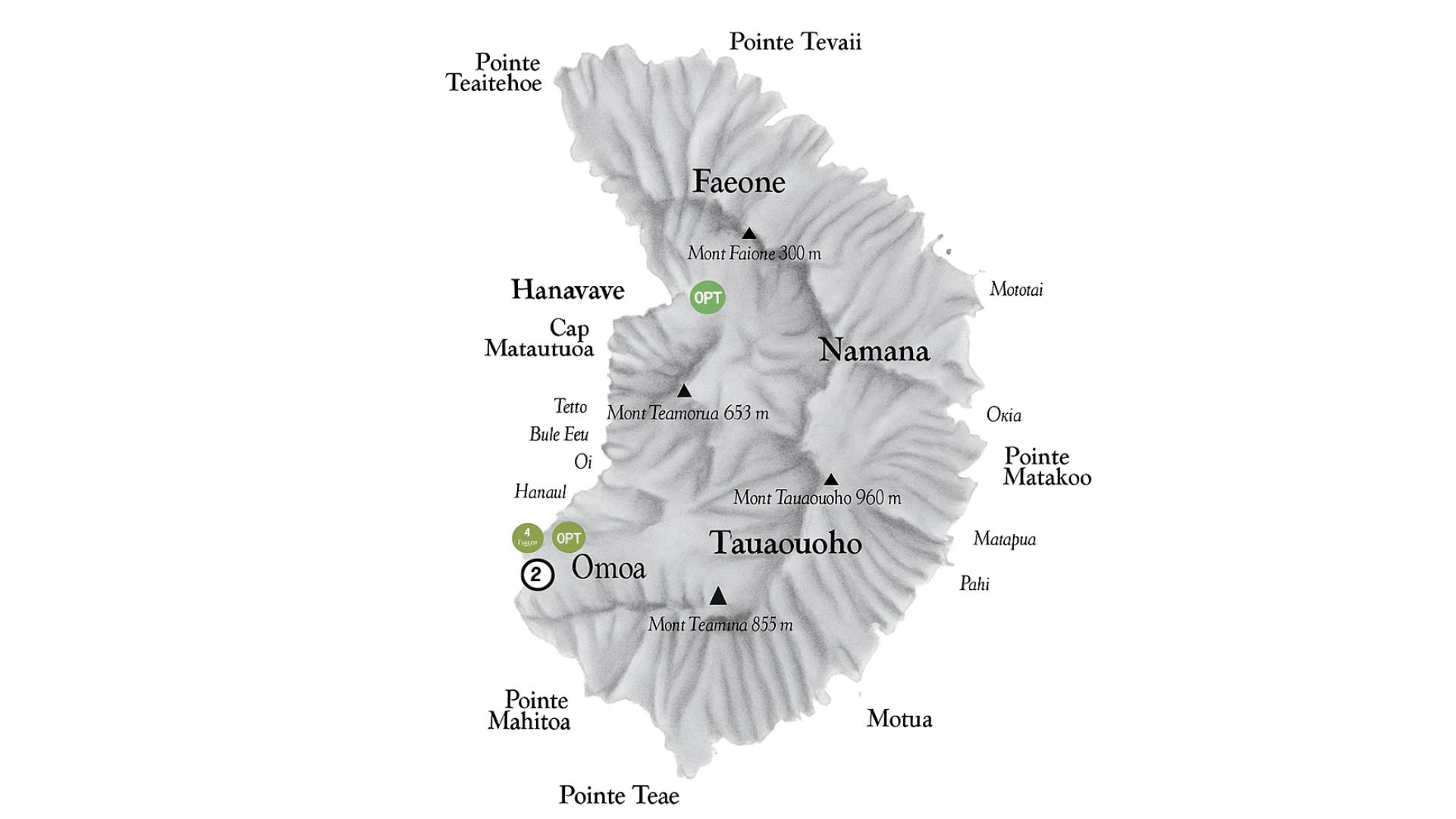
Fatu Hiva — the southernmost island of the Marquesas, accessible only by sea via the Aranui
Marquesas itinerary 10 Days in the Marquesas Islands — Complete Guide Why include the Marquesas in your French Polynesia trip and how to plan your circuit.Traditional Tapa Making — Living Marquesan Heritage
Tapa — the ancestral fabric of Fatu Hiva
In Fatu Hiva, tapa is far more than a craft — it is living heritage, passed down from generation to generation. This is one of the few places in all of French Polynesia where this ancient skill still endures. Tapa, a unique plant-based fabric, is made from the inner bark of the paper mulberry tree, carefully harvested then hand-beaten on a flat stone using a wooden mallet.
This work, performed mainly by women, requires patience and precision. The fine fibres are then assembled, dried in the sun, and decorated with symbolic motifs representing nature, ancestors, and valley spirits. Each piece tells a story — that of the island, a clan, or a significant event.
In the villages of Omoa and Hanavave, you can meet these passionate artisans who perpetuate an art that is both fragile and powerful. Fatu Hiva tapa is not just a souvenir — it is a piece of soul, a link between past and present. An absolute must during your visit.
The villages of Omoa and Hanavave — where you'll find the last tapa artisans of the Marquesas
How to get there Aranui Cruise — The Marquesas by Cargo Ship Everything you need to know about the Aranui, the only way to reach Fatu Hiva.The Omoa–Hanavave Trek — 17 km of Pure Wonder
The Fatu Hiva traverse — one of the most legendary hikes in the Marquesas
The Omoa–Hanavave trek is one of the most legendary hikes in the Marquesas — 17 km of effort and breathtaking scenery. This trail connects the two main villages of the island, winding through mountains, forests, and vertiginous ridges. Departure is at dawn from Omoa, before a gradual ascent offering spectacular views over deep valleys and the open ocean.
Throughout the path, vegetation alternates between ferns, banana trees, and mist-covered cliffs. You may encounter wild horses and perched goats — symbols of the island's untamed nature. After several hours of walking, the descent toward Hanavave gradually reveals one of the most beautiful panoramas in all of Polynesia: the Bay of Virgins, with its volcanic peaks plunging into the sea.
Demanding but accessible with a good fitness level, this crossing is an unforgettable experience. Many choose to do it with a local guide, who shares legends, anecdotes, and mountain secrets along the way. At the end of the path, the reward is immense: a swim in the bay, surrounded by majestic cliffs, as the sun sets over Hanavave.
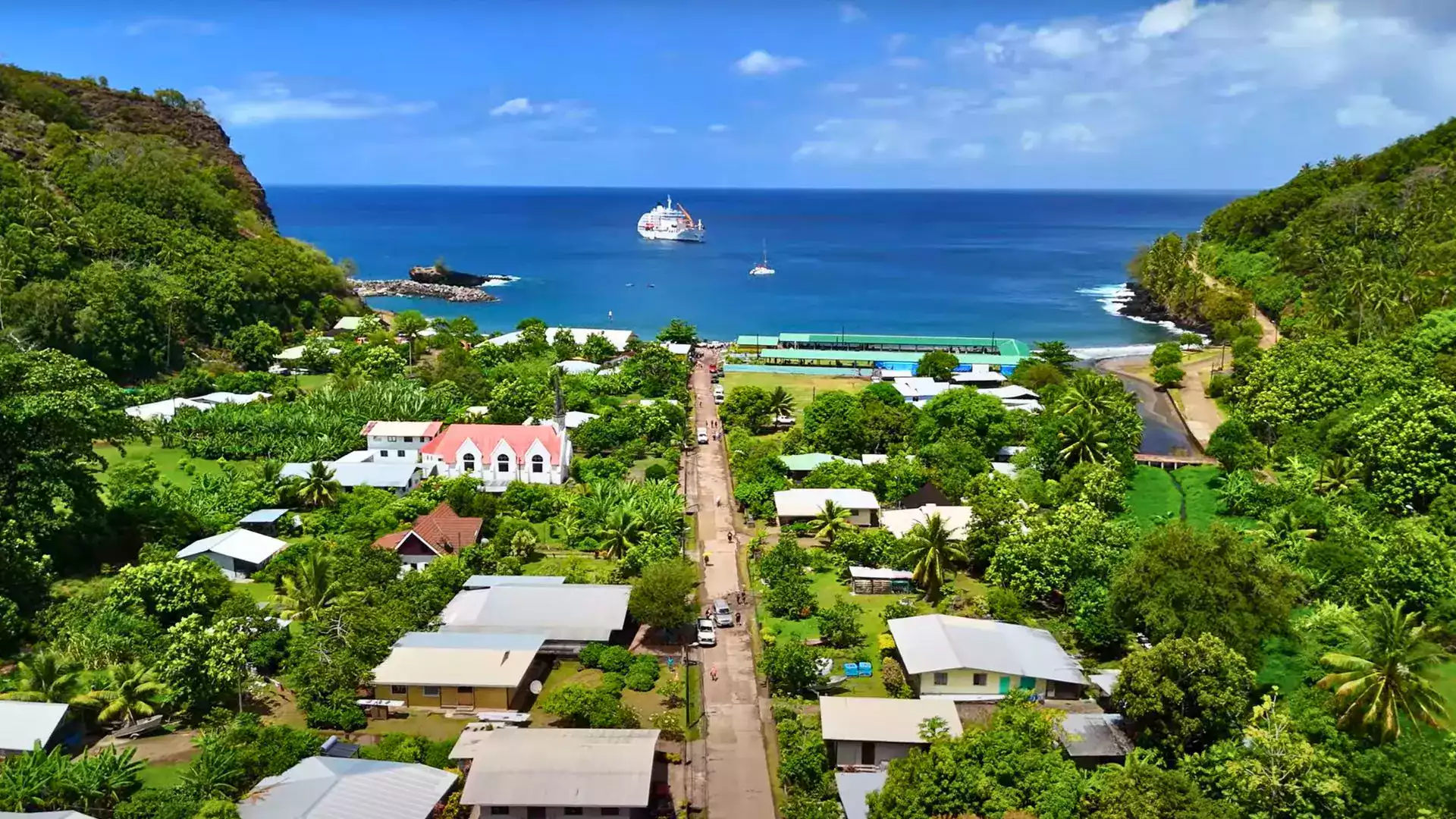
The village of Hanavave and the Bay of Virgins — the finish line of the legendary 17 km Fatu Hiva trek
Start early (before 7am) to avoid the midday heat. Take plenty of water — there are few sources on the trail. A local guide is recommended for a first crossing. Difficulty level: moderate to challenging.
Archaeological Sites — The Ancient Soul of Fatu Hiva
Paepae, tikis and petroglyphs — a living history
Like all the Marquesas Islands, Fatu Hiva holds numerous archaeological sites testifying to a rich and mystical past. The valleys around Omoa and Hanavave abound with paepae — stone platforms that once served as foundations for houses — carved tikis, silent guardians of sacred places, and petroglyphs engraved in rock representing human figures, animals, and symbols linked to fertility and ancient gods.
With a local guide, the visit takes on its full meaning: legends associated with each site, clan stories, ancient ceremonies, and the spiritual significance of the motifs. You understand how the Marquesans lived in harmony with their environment, celebrating the mountain, the sea, and their ancestors through these stone creations.
These sites, still preserved from mass tourism, offer a rare immersion in Marquesan culture. In Fatu Hiva, every step on these ancient trails is an encounter with history — intimate, cultural, mystical, and deeply moving.
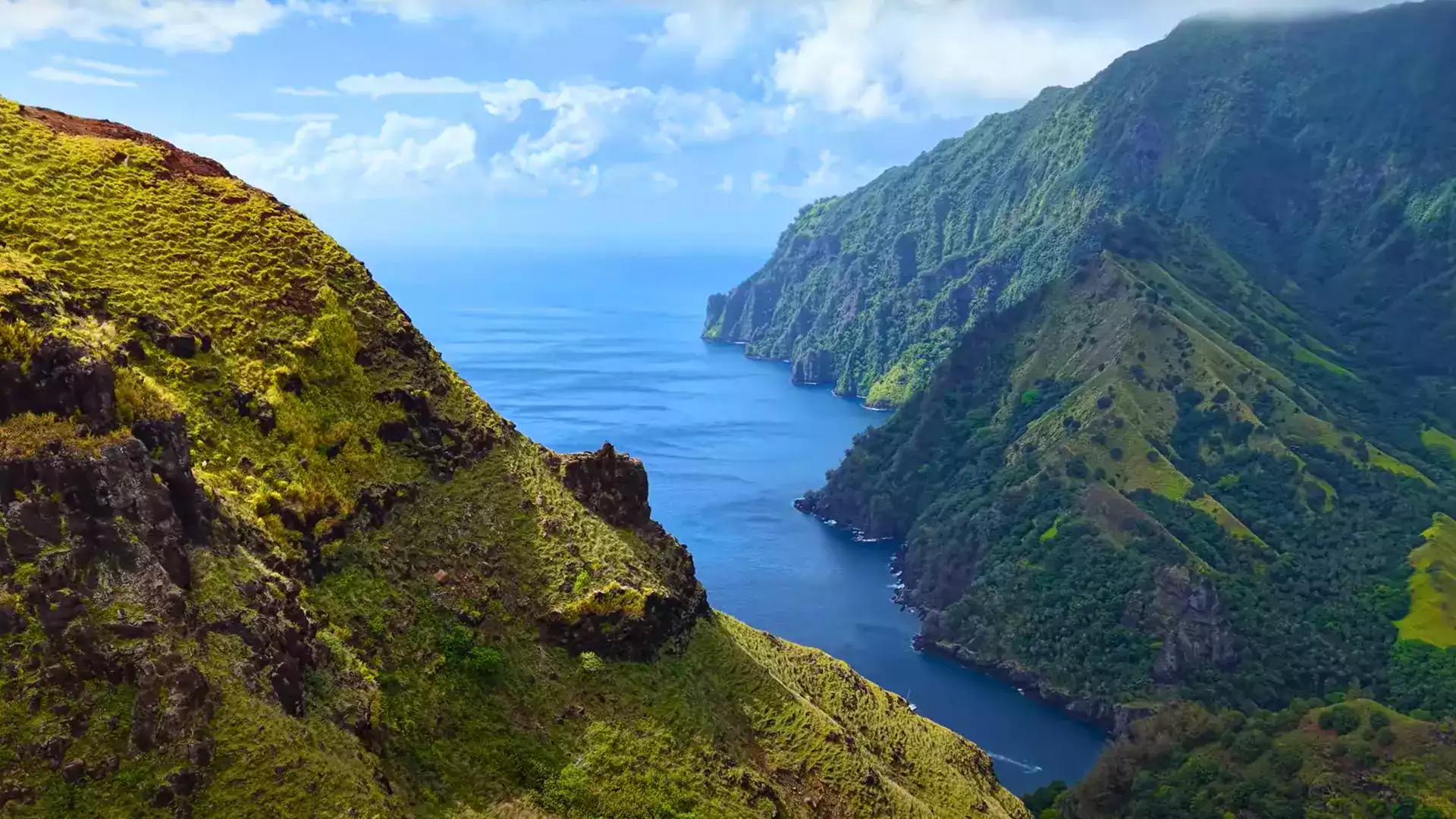
The valleys of Fatu Hiva — home to some of the best-preserved archaeological sites in the entire Marquesas archipelago
The Bay of Virgins — Fatu Hiva's Most Iconic Site
Baie des Vierges — the most beautiful bay in the Marquesas
The Bay of Virgins (Baie des Vierges) is Fatu Hiva's signature landscape — and one of the most spectacular natural sites in all of French Polynesia. Nestled between volcanic peaks that plunge directly into the sea, the bay captivates from the first moment: wild cliffs, crystalline waters, and an almost total absence of tourists.
The bay is perfect for photography, with its colours shifting throughout the day and season. The beaches remain almost deserted, offering a rare feeling of isolation and calm. Water enthusiasts can enjoy kayaking, diving, or snorkeling in its clear waters, while those seeking rest will find an incomparable atmosphere with the sound of waves and birdsong.
The sunsets from the rocks are unforgettable — one of those moments that stay with you for life. Whether you arrive by sea on the Aranui or after the trek from Omoa, the Bay of Virgins is the highlight of any visit to Fatu Hiva.
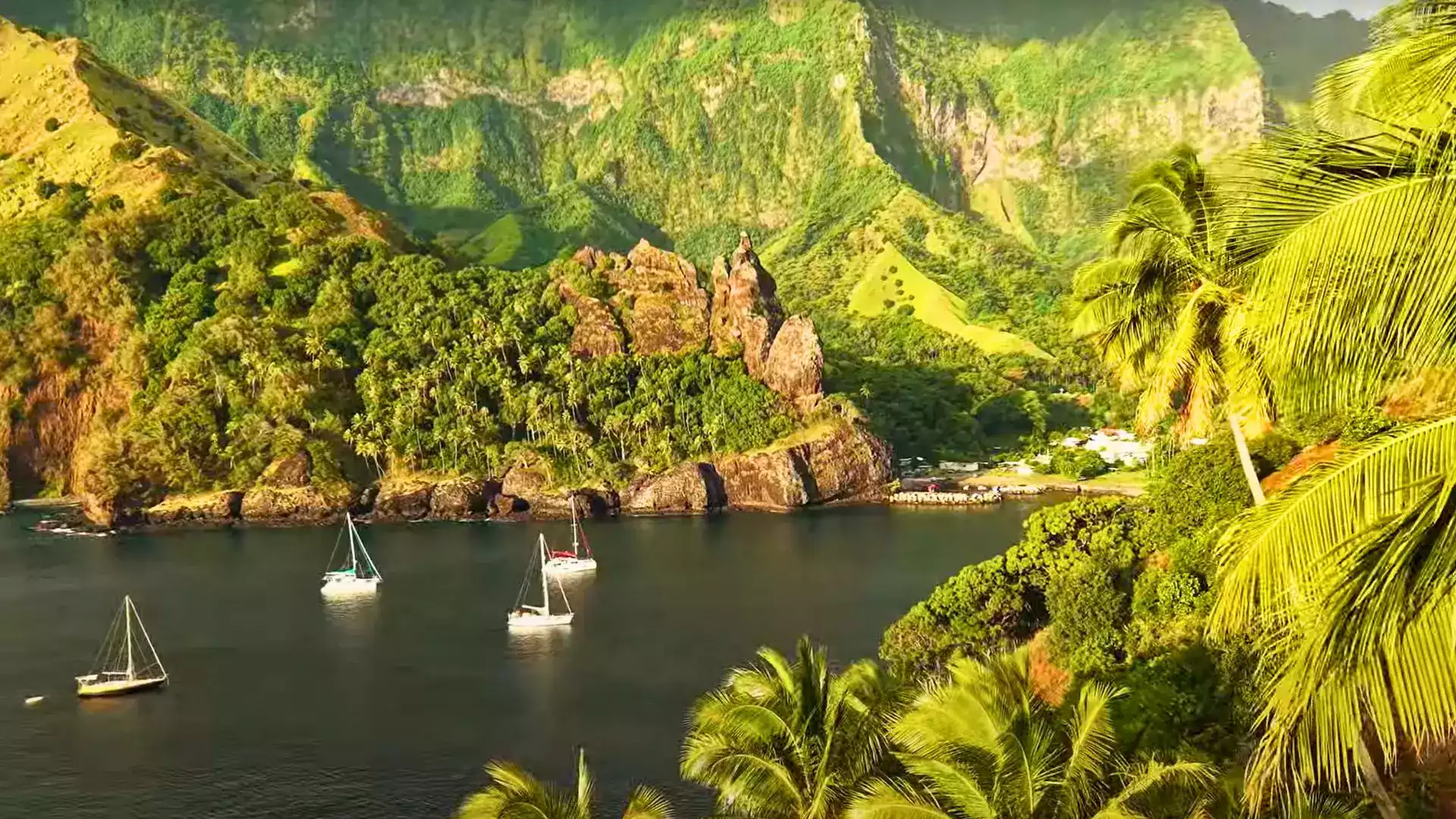
The Bay of Virgins at sunset — one of the most spectacular landscapes in French Polynesia
Cruise option Paul Gauguin Cruise — Luxury & Authentic Polynesian Experiences Another way to reach the Marquesas — the ideal blend of onboard luxury and island immersion.Sea Excursion — Cliffs, Secret Bays and the Vaipo Cave
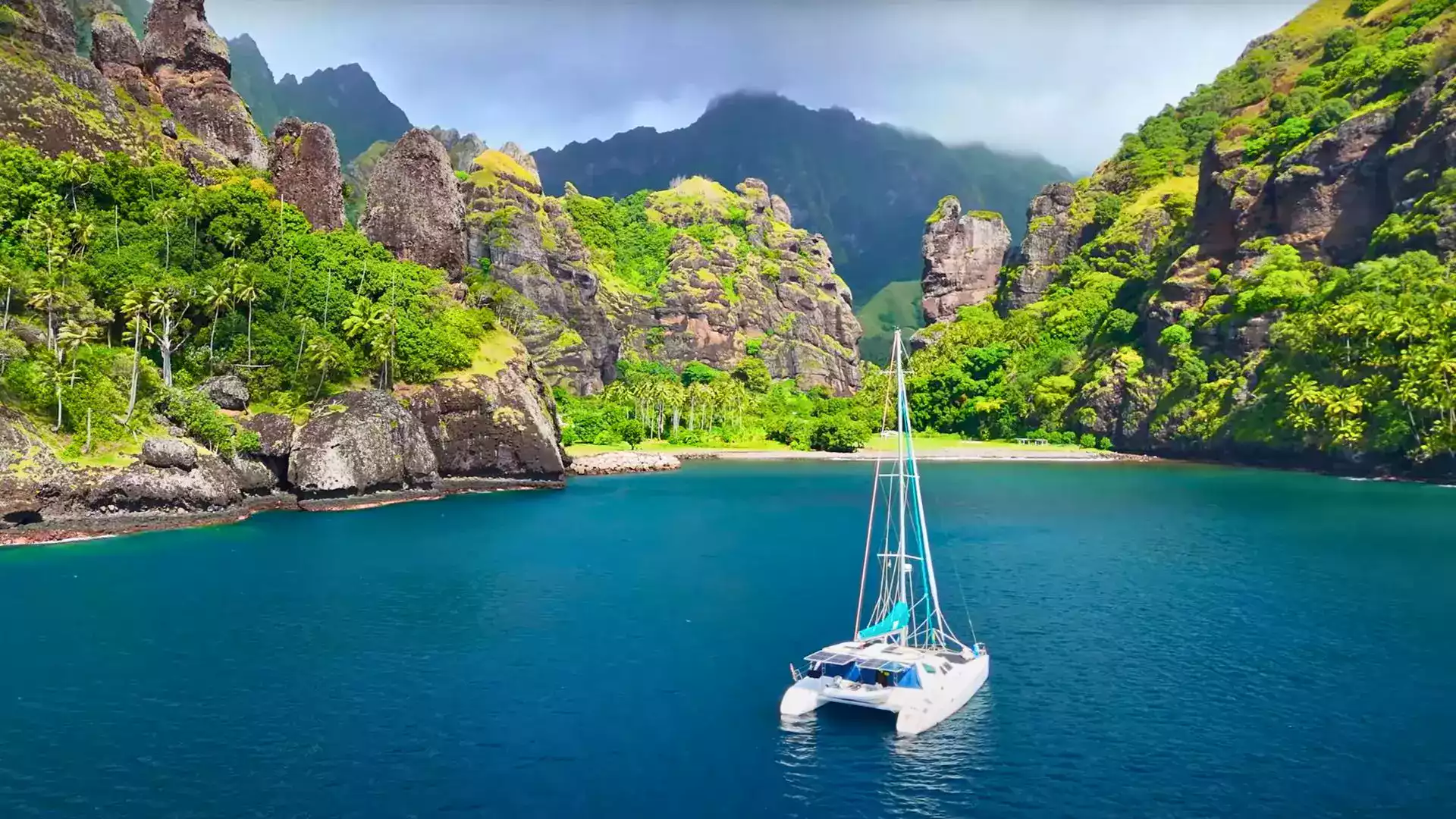
Navigating the coast of Fatu Hiva by boat
The sea excursion along the coast of Fatu Hiva is an essential experience. Departing from Omoa, you sail along the spectacular coastline to Hanavave and the Bay of Virgins. The marine landscapes reveal steep cliffs, turquoise waters, and fascinating wildlife — ideal for photography and nature observation.
The crossing to the Vaipo Cave is a highlight. Nestled in the hollow of volcanic cliffs, this cave impresses with its stalactites and interior waterfalls, creating an almost mystical atmosphere. Local guides share legends and anecdotes about the coastline throughout the journey.
Along the way, you may spot isolated beaches, secret bays, dolphins, and sea turtles. The boat allows you to approach areas completely inaccessible on foot, offering total immersion in the island's wild nature — a perfect complement to the overland experience.
The coast of Fatu Hiva by boat — vertiginous cliffs, secret bays and the Vaipo Cave
Practical Information — Getting to Fatu Hiva
Fatu Hiva has no airport. The only way to reach the island is by sea — either on the Aranui cargo-passenger ship (the main option for tourists) or by inter-island boat. The Aranui journey from Papeete takes several days and visits multiple Marquesas islands along the way, making it the natural and logical way to explore the archipelago.
Plan at least 3 to 4 days to experience the main activities: the Omoa–Hanavave trek, the Bay of Virgins, tapa artisans and a sea excursion to the Vaipo Cave. With the Aranui, your time on the island is fixed by the ship's schedule — make the most of every hour.
FAQ — Fatu Hiva, Marquesas Islands
More Marquesas Islands Guides
Marquesas · Nuku Hiva Things to Do in Nuku Hiva — Complete Guide The largest island in the Marquesas — waterfalls, valleys, wild beaches and authentic Marquesan culture. Marquesas · Hiva Oa Things to Do in Hiva Oa — Paul Gauguin & Marquesas Culture The island where Gauguin and Jacques Brel are buried — one of the most culturally rich destinations in French Polynesia. Marquesas · Ua Huka Top 9 Things to Do in Ua Huka Wild horses, wood carving, bird sanctuary and remote beaches — Ua Huka at its most authentic. Cruises Catamaran Cruise in the Marquesas Islands An alternative to the Aranui — explore the Marquesas by catamaran at your own pace.