Contact us here to plan your future trip to French Polynesia

Best Time to Visit
French Polynesia —
Month-by-Month 2026
The honest answer: for the Society Islands and northern Tuamotu (Tahiti, Moorea, Bora Bora, Rangiroa, Fakarava, Tikehau), late April to early November is the best window. That's when the weather is reliable, the sea is calm, and the conditions are ideal for lagoon activities, diving and snorkeling. August through October adds an extraordinary bonus: humpback whale season — one of the most moving wildlife experiences anywhere in the world.
Not every archipelago follows this pattern, though — the southern Tuamotu, the Australes and the Gambier Islands don't really have a rainy season, and the Marquesas split into two distinct climates north and south. We cover all of it below.
We live in Moorea. We experience all seasons here, we see the whales every year from August onwards, and we travel between islands year-round. This guide is built on that direct experience, not on generic tourism copy.
When to visit French Polynesia — weather, whale season and month-by-month guide.
Best time to visit French Polynesia — by traveller type
September–October — the absolute peak
September and October are the best months to swim with humpback whales in Moorea. Maximum number of whales, most active calves, excellent ocean conditions. August marks the start of peak sightings. Early November is possible but the whale season begins to wind down and weather becomes less reliable.
May–June or September–October
Perfect weather, less crowded than July–August, more reasonable prices. September–October combines ideal conditions with whale season for an unforgettable experience. May–June is the best choice if you prefer quieter beaches and lower high-season prices.
Year-round — but May–October for ideal conditions
Diving is possible 12 months a year in French Polynesia — it's one of the year-round advantages of this destination. May to October gives you the best water clarity and calmest conditions in the Society Islands and northern Tuamotu. The Tuamotu atolls (Rangiroa, Fakarava, Tikehau) are the top diving destinations regardless of season.
July–August — peak whale season & best weather
July, August and September are the high tourist season — and also the driest period of the year with the most comfortable temperatures (24–28°C / 75–82°F). It's cooler and less humid than the rest of the year, which makes it the most pleasant time to be outdoors. August delivers peak whale sightings, and July marks the beginning of the season. The trade-off: highest prices, most tourists, and accommodation that books out months in advance. Reserve everything at least 4–6 months ahead.
March–April — end of rainy season, best prices
December through February is rainy season in the Society Islands — hot, humid, with heavy rainfall. Worth avoiding there. But March and especially April see conditions improving considerably while prices remain low. Late April is the sweet spot: the rainy season is ending, prices are still low, and the dry season is just beginning.
Late April to early November
This is the reliable window for the Society Islands and northern Tuamotu. The dry season (May to October) is the classic best time — sunny skies, trade winds, comfortable temperatures around 24–28°C (75–82°F), calm seas. Late April is the transition and already very good. Early November is the limit — it starts getting hotter and wetter from there.
Two seasons in French Polynesia — what to expect
This dry-season/rainy-season pattern applies to the Society Islands (Tahiti, Moorea, Bora Bora) and the northern Tuamotu (Rangiroa, Fakarava, Tikehau). Other archipelagos have their own climate — see the dedicated sections further down for the Marquesas and for the southern Tuamotu, Australes and Gambier.
Dry season — late April to early November
The dry season is the best overall time to visit the Society Islands and northern Tuamotu. Trade winds keep the humidity manageable, rainfall is minimal, and the sky stays reliably blue. July, August and September are the driest months and also the coolest — temperatures hover around 24–28°C (75–82°F), which is more comfortable than the hot, humid months of the rainy season. It's precisely this cooler, drier weather that makes this the tourist high season, and it fully justifies the popularity.
For the Society Islands and northern Tuamotu, the recommended travel window is late April to mid-November.
May–June: excellent weather, reasonable prices, quieter beaches. September–October: perfect weather + whale season at its peak. Both are better than July–August for most travellers who aren't tied to school holiday schedules.
Rainy season — mid-November to late April
The rainy season brings higher temperatures (up to 30–32°C/86–90°F), high humidity, and frequent rainfall in the Society Islands and northern Tuamotu. December, January and February are the worst months — heavy, prolonged rainfall, the highest humidity of the year, and the risk of tropical cyclones (rare but possible). March is still wet. We recommend avoiding December through March entirely for this zone, unless budget is the primary constraint.
April sees conditions improving noticeably — it's the transitional month where the rainy season ends and the dry season begins. Late April is already good enough for a trip.
Early November can still be excellent, especially for whale watching (the season's final weeks). But from mid-November onwards, it starts getting hotter and wetter in the Society Islands. We treat early November as the outer limit of the good travel window for this zone.
South Tuamotu, Australes & Gambier — no real rainy season
Not every archipelago follows the dry/rainy pattern above. The southern Tuamotu atolls, the Austral Islands and the Gambier Islands don't have a true rainy season — rainfall is spread fairly evenly across the year rather than concentrated between November and April. These archipelagos also tend to run cooler and more temperate than the tropical Society Islands, especially the Australes, which sit further south. In practice, the "avoid December–March" rule that applies to Tahiti, Moorea and Bora Bora doesn't really apply here — you can plan a trip to Rurutu, Tubuai or Mangareva at almost any time of year without worrying about a defined wet season.
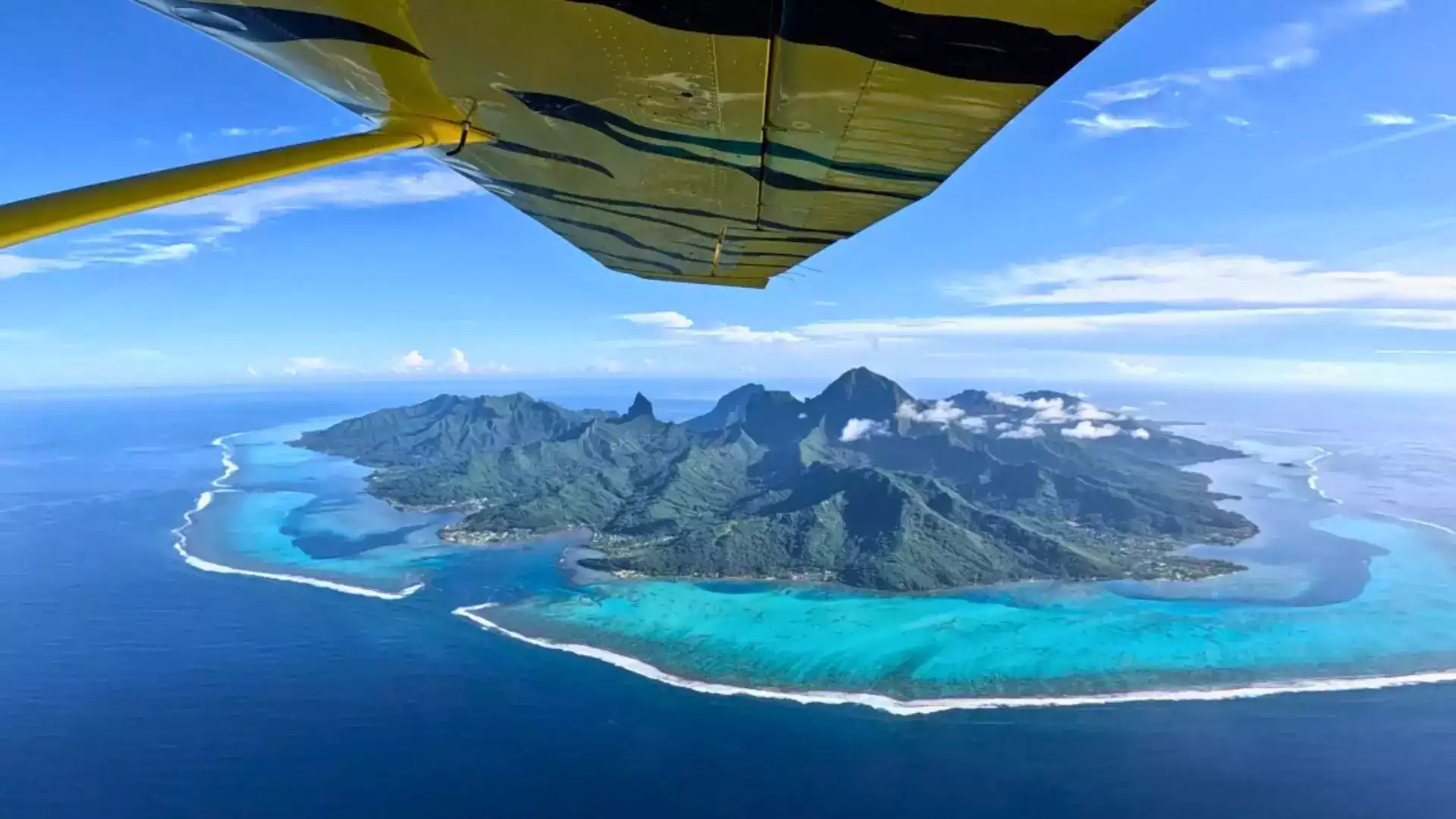
Moorea lagoon during the dry season — the kind of sky you get from May to October.
Whale Season in French Polynesia — Complete Guide
Swimming with humpback whales in Moorea is one of the most extraordinary experiences we've had in French Polynesia — and we say that having done a lot. You're in the water, swimming towards a whale with fins, mask and snorkel — and time simply stops. A mother with her calf, moving slowly, sometimes turning to look at you. It's moving in a way that's hard to describe to someone who hasn't done it.
The season runs from August through November, with September and October being the absolute peak — the highest density of whales, the most active calves, and the best ocean conditions for getting in the water with them. We have dedicated articles on the best whale watching operators in Moorea and what to expect — see the links below.
How does a whale watching tour work?
Tours depart by boat and approach the whale at a regulated distance of 100 metres. Once the guide spots the right conditions, the group does a water entry — fins, mask and snorkel only, no scuba — and swims with the whale. You are always accompanied by a certified guide.
You have the choice of how you participate: you can get in the water and swim with the whales, or stay on the boat and observe from above. Some tours also offer a boat-only option for those who prefer not to swim. The experience is accessible even for non-strong swimmers, as the guide manages the approach and the pace.
The 100-metre approach distance by boat is strictly regulated by French Polynesian law. From there, the group enters the water and swims towards the whale — always with a guide, always in small groups. This protocol protects the animals while allowing a genuinely close encounter.
When exactly is whale season?
Humpback whales migrate from Antarctica to the warm waters of French Polynesia from August to November, with some early arrivals in late July. They come to give birth, nurse their calves, and rest before the long return journey south.
| Month | Whale activity | Our verdict |
|---|---|---|
| July | First arrivals — limited sightings | Start of season |
| August | Peak sightings begin — excellent | Peak starts |
| September | Maximum density — most active calves | Best month |
| October | Still excellent — numbers begin tapering | Excellent |
| November | Last sightings — declining, weather worsening | Last chance |
Whale Season in Moorea — the #1 destination
Moorea is the undisputed best destination for whale watching in French Polynesia. The island's underwater topography creates a natural corridor where whales pass close to shore, and the west coast drop-off brings them within swimming distance. Tours are run by certified guides in small groups — typically 6 to 8 people maximum — with strict protocols to protect the whales.
Whale Season in Bora Bora
Bora Bora also offers whale sightings during the same August–November window, particularly along the outer reef and channel entrances. Encounters are less frequent and less consistent than in Moorea, since Bora Bora's lagoon topology doesn't create the same natural corridor — but several operators run dedicated whale tours from the island, often combined with a lagoon excursion. If whale watching is your priority, Moorea remains the safer bet; if you're already staying in Bora Bora, it's absolutely worth booking a tour rather than skipping the season.
Tahiti & Rurutu
Tahiti also offers sightings, particularly along the west coast, though encounters are less consistent than Moorea. The Austral Islands (especially Rurutu) are a lesser-known hotspot where whales come very close to shore — but they require a domestic flight and have limited infrastructure.
French Polynesia is one of the few places in the world where swimming with humpback whales is legal and strictly regulated. Guides must hold marine certifications, groups are kept small, and approach distances and behaviour protocols are enforced. If you book with a certified operator, it's an experience done with full respect for the animals.
Diving & Snorkeling in French Polynesia — When to Go
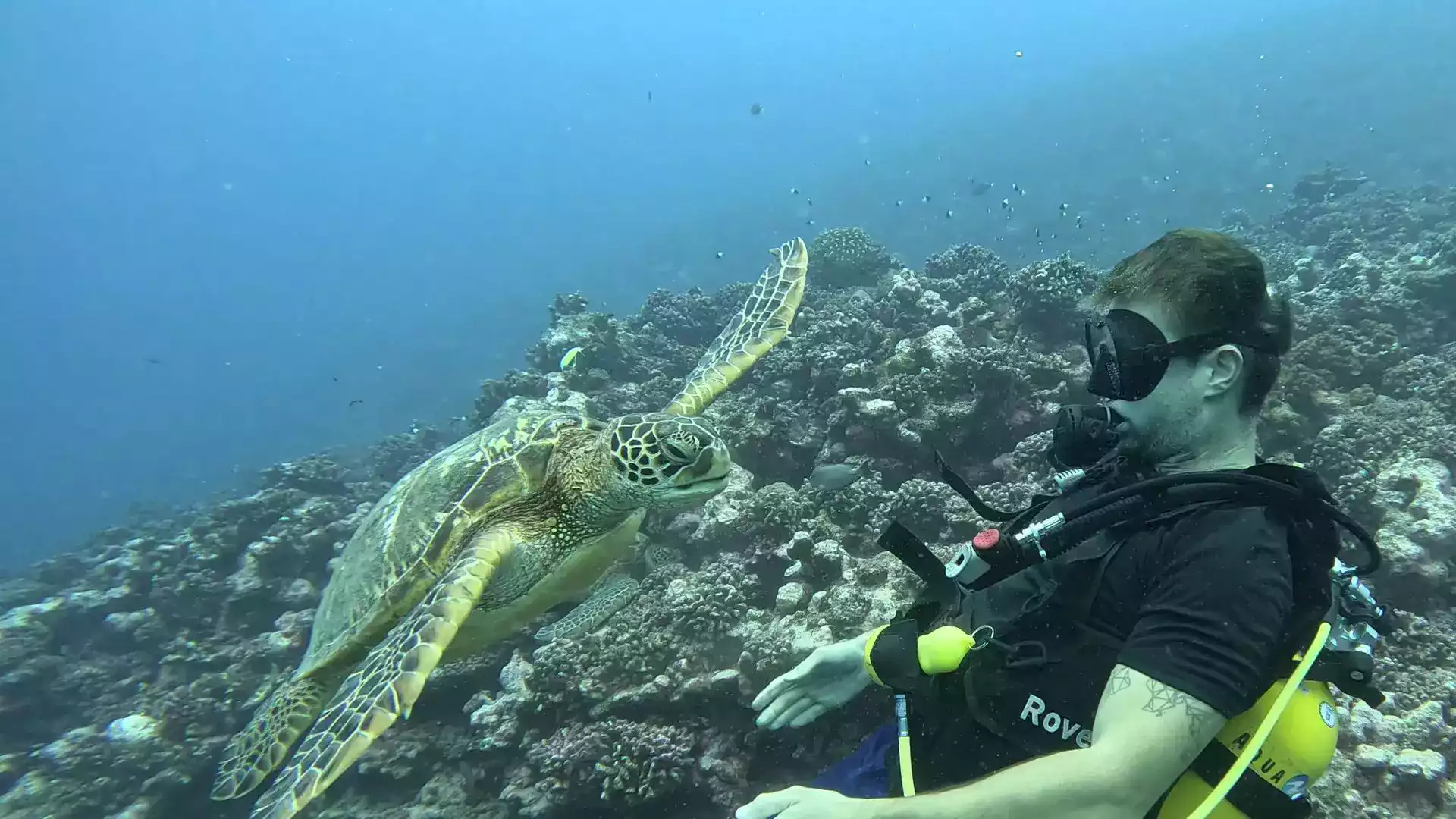
A sea turtle spotted while diving in Moorea — French Polynesia offers exceptional underwater encounters year-round.
Best Time to Dive in Tahiti & French Polynesia — Year-Round, Best Conditions May to October
Diving in French Polynesia — including in Tahiti itself — is possible 12 months a year — this is one of the year-round advantages of the destination. Unlike whale watching, there is no specific season to plan around. The Tuamotu atolls (Rangiroa, Fakarava, Tikehau) are the top diving destinations in French Polynesia, famous for shark passes, ray encounters and exceptional water clarity, and they can be dived at any time of year. Visibility is excellent virtually year-round — one of the genuine strengths of diving in French Polynesia.
July, August and September are peak months for diving conditions in Tahiti and the northern Tuamotu — dry weather, calm seas — but the water is slightly cooler than the rest of the year, and there are significantly more divers in the water. If you prefer quieter dive sites with fewer boats and smaller groups, April–May and October–November are the sweet spots: still excellent conditions, much less crowded underwater.
For the best combination of good conditions and uncrowded dive sites, aim for April–May or October–November. You'll have the passes and reefs mostly to yourselves — a very different experience from the August rush when every operator is running multiple daily dives.
Snorkeling — year-round, always calm in the lagoon
Snorkeling in French Polynesia is genuinely accessible year-round. The lagoons are protected and calm regardless of the ocean conditions outside — even during the rainy season, a lagoon snorkeling session in Bora Bora or Moorea is perfectly comfortable. The best conditions for lagoon tours and snorkeling excursions are from May to October, when the weather is driest and the visibility is at its best.
Bora Bora excursions Best Things to Do in Bora Bora — Lagoon Tours & Snorkeling The best lagoon excursions in Bora Bora — manta rays, sharks, coral gardens.French Polynesia Month-by-Month — Complete Breakdown
Society Islands & northern Tuamotu: recommended window is late April to mid-November. Southern Tuamotu, Australes & Gambier: no defined rainy season. Marquesas: different again — see the dedicated section below.
| Month | Weather | Whales 🐋 | Crowds | Rating |
|---|---|---|---|---|
| January | Hot, very rainy, humid | ❌ | Low | Avoid |
| February | Heaviest rainfall, peak humidity | ❌ | Very low | Avoid |
| March | Still wet, improving | ❌ | Low | Avoid if possible |
| April | Getting drier, late April good | ❌ | Low | Late April ✓ |
| May | Dry season begins — excellent | ❌ | Moderate | Recommended |
| June | Sunny, dry, trade winds | 👀 First arrivals | Moderate | Recommended |
| July | Excellent — dry season peak | ✅ Season starts | High | Very good |
| August | Perfect | ✅ Peak begins | Very high | Excellent |
| September | Perfect | ✅✅ Peak of peak | High | Best month |
| October | Excellent, still dry | ✅ Still active | Moderate-high | Excellent |
| November | Getting wetter — limit | 👋 Last sightings | Low-moderate | Early Nov only |
| December | Hot, rainy, humid | ❌ | Moderate (Christmas) | Avoid |
Best: September, October, August. Very good: May, June, July. Acceptable: late April, early November. Avoid: December, January, February, March. This ranking is for the Society Islands and northern Tuamotu — the southern Tuamotu, Australes and Gambier don't follow this pattern, and neither do the Marquesas.
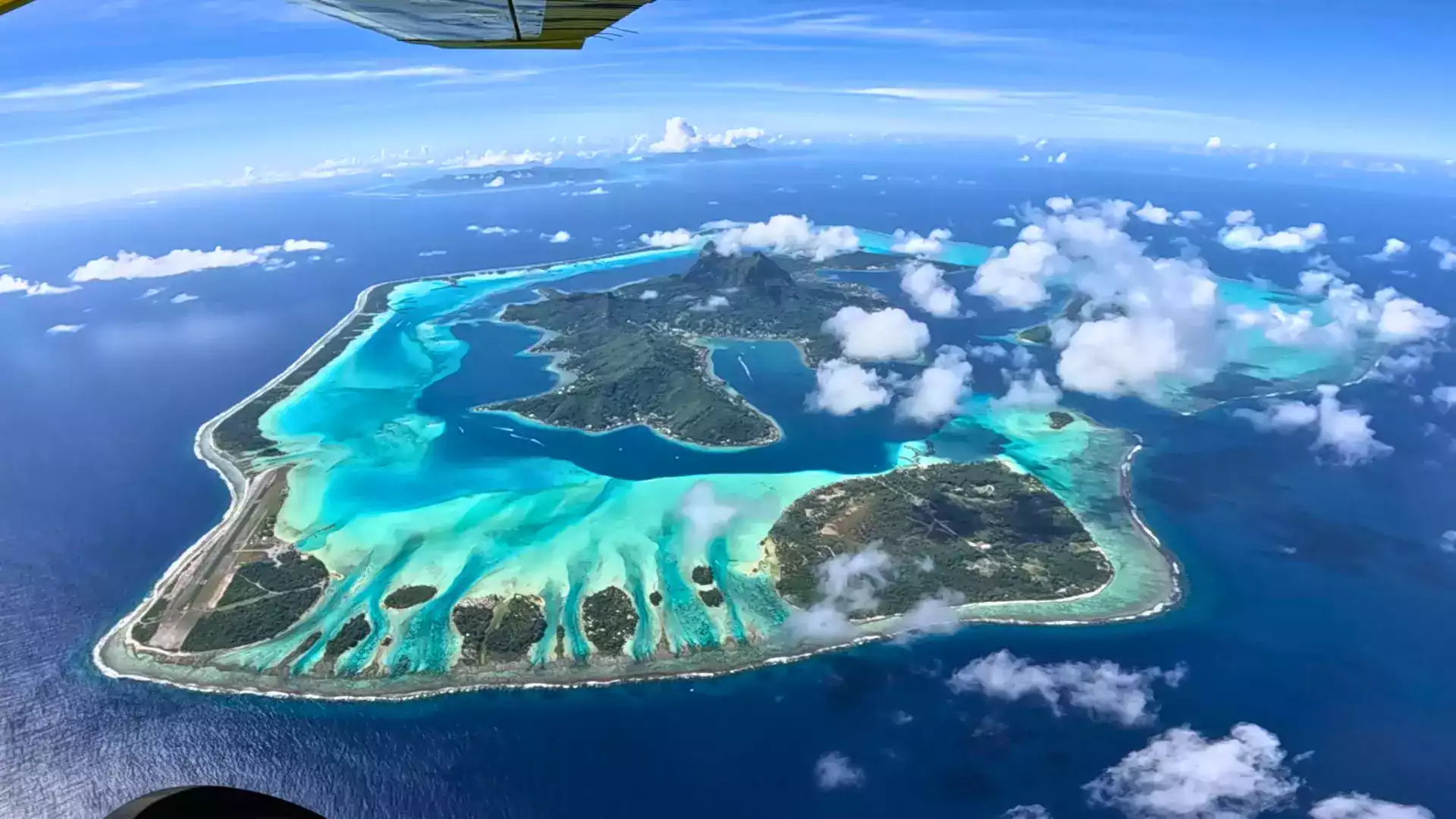
Bora Bora in peak dry season — the turquoise of the lagoon is at its most vivid from May to October.
Marquesas Islands — a Different Calendar
The Marquesas Islands follow a different seasonal pattern from the rest of French Polynesia — and the pattern isn't even uniform across the archipelago. The north and south groups have genuinely different climates.
North Marquesas — no real rainy season
The northern islands (Nuku Hiva, Ua Pou, Ua Huka) have a much drier climate overall, with no true rainy season to plan around. Rainfall is more evenly spread and generally lighter throughout the year than in the rest of French Polynesia. This makes the north Marquesas a reliable destination almost any time of year — a genuine exception in French Polynesia's seasonal calendar.
South Marquesas — dry season September to December
The southern islands (Hiva Oa, Tahuata, Fatu Hiva) follow a more defined pattern, with the dry season running from September to December. This is a natural extension of the good season elsewhere in French Polynesia, continuing into December when the Society Islands and northern Tuamotu are already entering their rainy season.
If you're extending a Society Islands trip into October–December, the south Marquesas (Hiva Oa, Fatu Hiva) line up perfectly with that timing. If you're travelling outside that window, the north Marquesas (Nuku Hiva, Ua Pou) is the safer choice thanks to its naturally drier, more stable climate year-round.
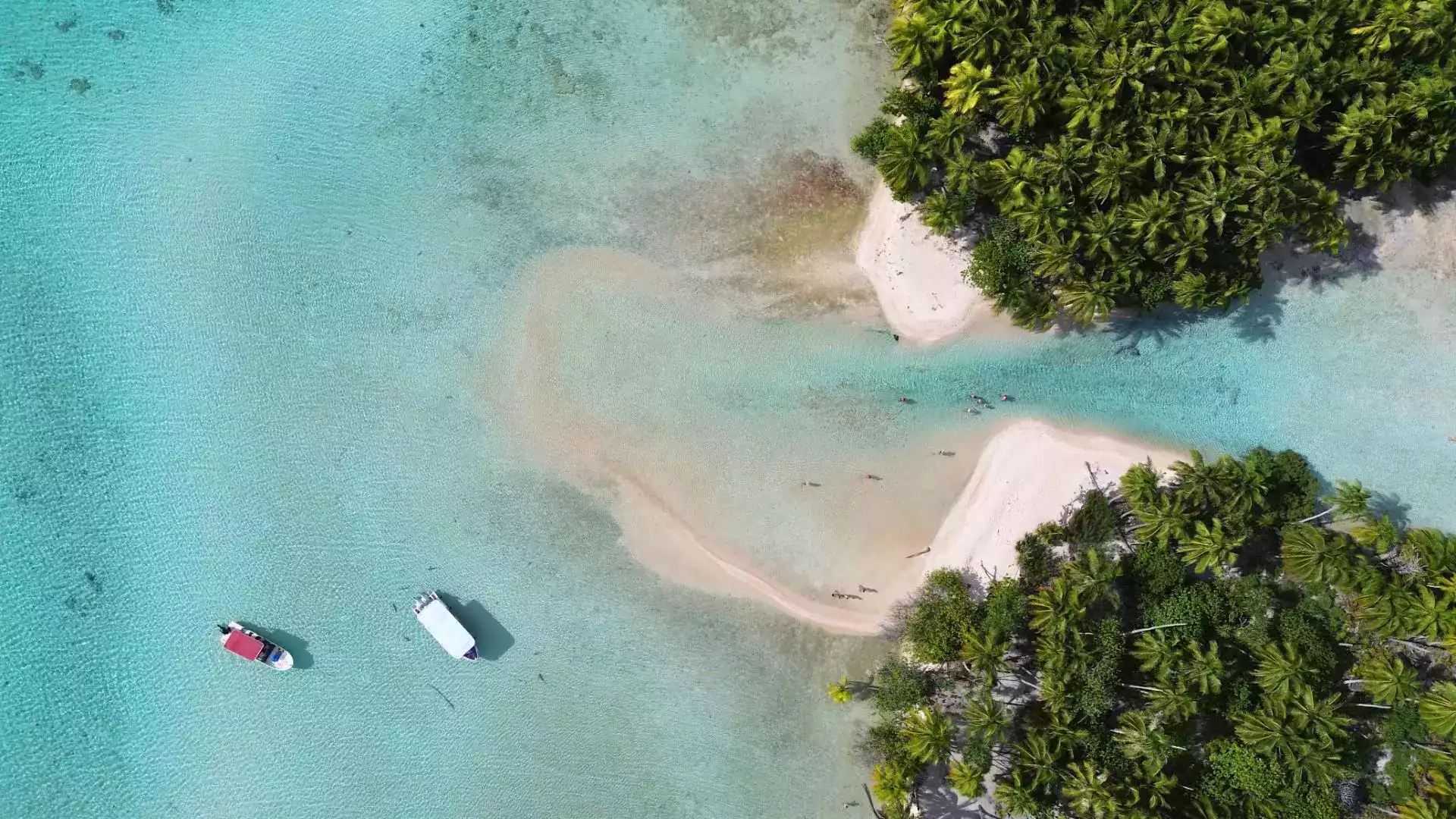
The Pink Sand beach of Fakarava — the Tuamotu atolls can be visited year-round, with optimal conditions from May to October.
FAQ — Best Time to Visit French Polynesia
More guides to plan your French Polynesia trip
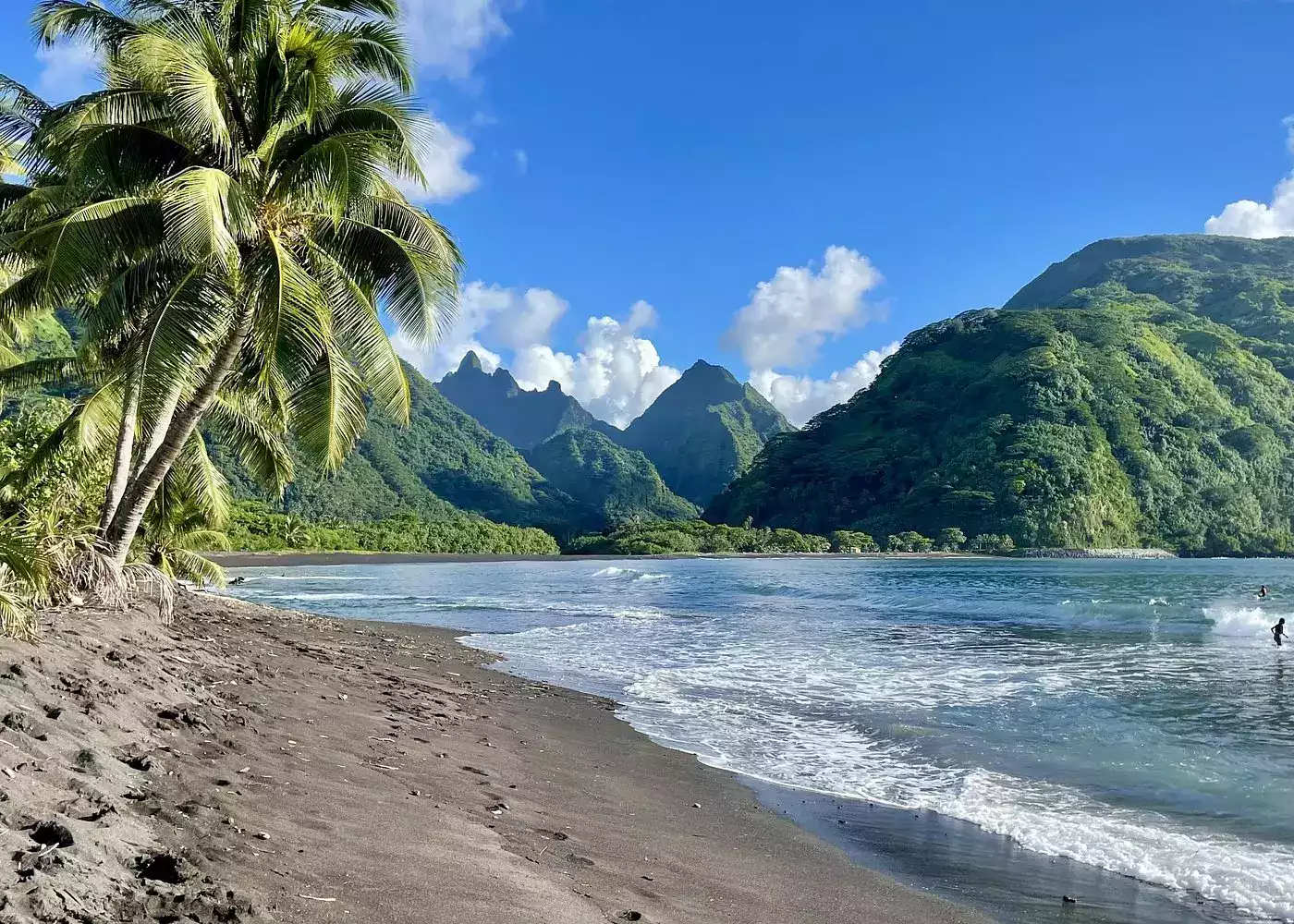
Tautira, south Tahiti — even during the rainy season, Tahiti has pockets of beauty worth exploring.
10-day itinerary 10-Day French Polynesia Itinerary — Moorea & Bora Bora The classic 10-day circuit planned month by month — including whale season tips. Honeymoon French Polynesia Honeymoon Guide 2026 Best months for a honeymoon, which islands to combine, and what it really costs. Plan your trip How to Choose a Travel Agency for French Polynesia Local agencies with better rates and local knowledge — ideal for booking once you've chosen your timing. Tuamotu diving Best Things to Do in Fakarava — Diving & Activities Guide Fakarava is one of the top year-round diving destinations in French Polynesia. Getting around Air Tahiti vs Air Moana — Which Inter-Island Airline? Compare the two local airlines — routes, prices, passes and when to book.