Contact us here to plan your future trip to French Polynesia

Best Things to Do
in Fakarava —
Top 7 Activities 2026
Fakarava is the atoll that divers the world over put on their bucket list. A UNESCO Biosphere Reserve, it's the second largest island in the Tuamotu archipelago after Rangiroa — and a destination that remains more authentic, more intimate, with fewer visitors and fewer accommodation options. That's part of its charm: Fakarava is still an island you have to earn a little.
One essential thing to understand before you go: Fakarava is like two islands in one. The north and south are separated by roughly 1h15 to 1h30 by boat. Two completely different atmospheres, two distinct experiences. The north (Rotoava) is more developed — accommodation, dive centres, restaurants, activities, airport, cars, bike rentals. The south (Tetamanu) is almost deserted, remote, at the end of the world — accessible only by boat, with a handful of small rustic guesthouses and absolute silence. Our recommendation: stay in the north and do the South Pass as a day excursion. If you're staying 5 nights or more, 3 nights north and 2 nights south is the ideal combination.
We dived both passes. We stayed in the north. We did the South Pass as a day trip from the north. And we came back convinced that Fakarava is one of the world's greatest diving destinations — and that even without a tank, there's plenty to take your breath away.
Fakarava — the divers' atoll, UNESCO Biosphere Reserve.
Fakarava — our favourite atoll for seeing hundreds of sharks
Fakarava is smaller than Rangiroa — and more charming for it. The village of Rotoava has real character, with its colourful houses and dream beaches. It's a good middle ground in the Tuamotu: bigger and better-structured than Tikehau, yet more intimate and better preserved than you might expect. That said, Fakarava has become very touristy — and it's also the most expensive of the three atolls (Tikehau, Fakarava, Rangiroa) for activities and diving.
To help you choose between the three: Tikehau is, for us, the most incredible paradise — the smallest, least touristy, most intimate. 3 nights is plenty. Fakarava is a diver's paradise above all — the South Pass is non-negotiable if you go. But it's busy and expensive, and you need to book early. Rangiroa is ideal for 4 to 5 nights, with the Reef Island and Blue Lagoon excursions among the most beautiful things we've seen in French Polynesia — perfect for families and non-divers alike.
We went as a group of eight — and we were lucky to go out of season, which meant there was actually room. In high season, it's mission impossible: everything fills up months in advance. Fakarava Lodge has several bungalows (some for 2, some for 4), which works perfectly for groups. We were there to dive: two double-dives in the North Pass, one dive at the South Pass on the Tetamanu day trip, a North Lagoon tour with Rotoava Excursion, and a South Pass excursion as well. Between sessions, we cycled around — PK9 beach behind the airport, the fishermen's dock, a stroll along the beautiful concrete road that runs alongside the lagoon. We even made it to the other side of the atoll. We loved it.
We dived both passes. The North Pass (Garuae) is the widest in French Polynesia — that's where the action is, with current, a variety of dive sites, and schools of jack and leopard rays sweeping through. The South Pass (Tumakohua) is smaller, technically more accessible, and better preserved — and that's where the real spectacle unfolds: the shark wall. Hundreds of grey reef sharks in the pass, a density of marine life that leaves you speechless. And in June, the grouper spawning — a rare, awe-inspiring phenomenon.
And for Rangiroa — which we recommend just as warmly — it's also extraordinary for dolphins: watching them leap right in front of you at the pass, snorkeling and diving alongside them, is an experience you never forget. Among the most beautiful things we've lived in French Polynesia.
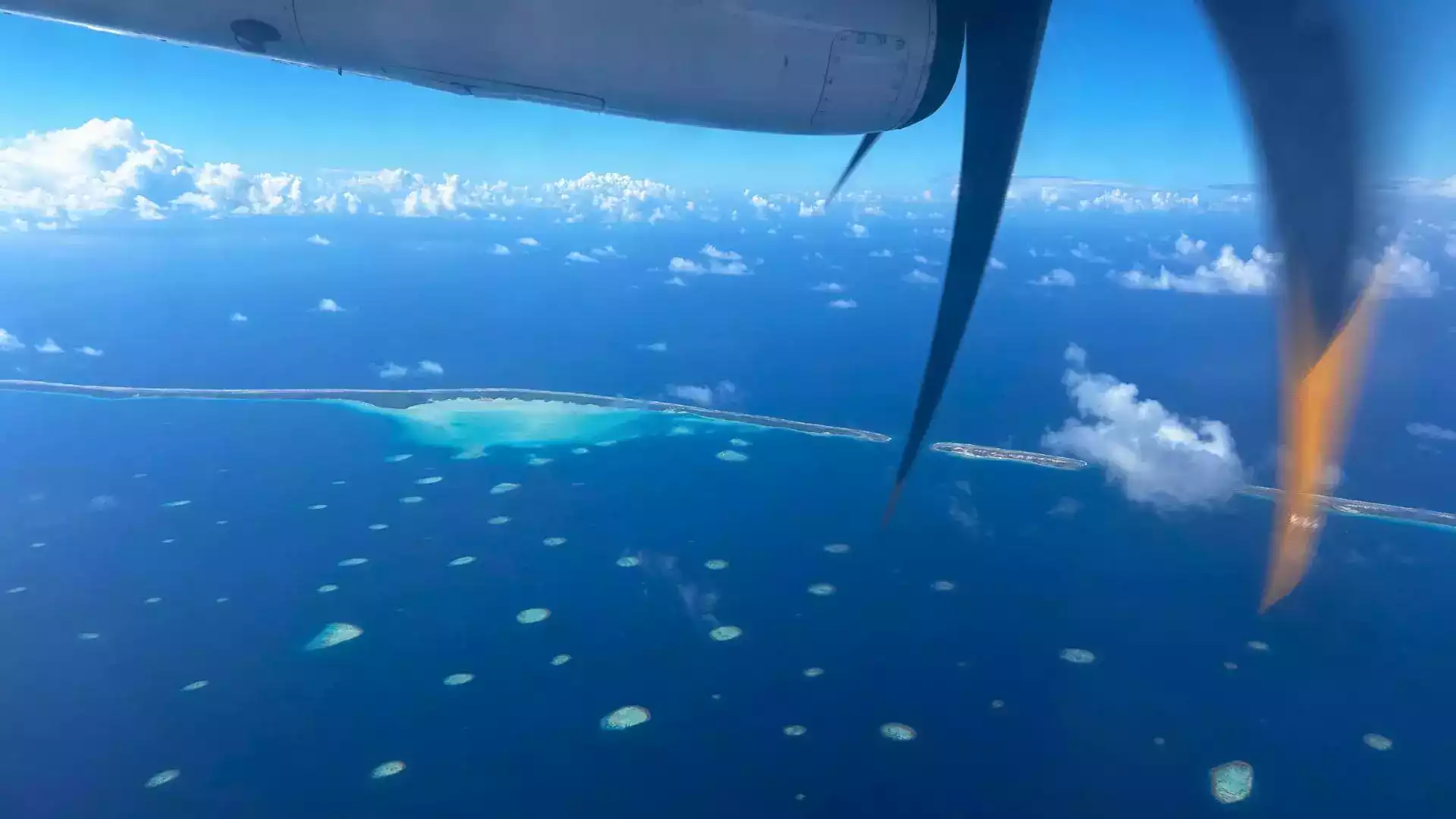
Fakarava from above — the North Pass of Garuae, the widest pass in all of French Polynesia.
Diving the Fakarava North Pass — Garuae
Drift diving Garuae Pass — multiple dive centres in the north
The Garuae Pass is the widest in French Polynesia. It's the main pass in northern Fakarava, just minutes from the village of Rotoava — and this is where the majority of dive centres are based. Practical: from the north, you're just a short distance from the pass, and you can fit in multiple dives in a single day without any lengthy navigation.
The current in Fakarava is less strong than in Rangiroa — dives are generally more accessible, even for beginners. The North Pass is very wide, offering a great variety of different sites: drift dives, reef dives, drop-offs. Impressive marine life throughout — schools of jack, leopard rays, napoleon wrasse, grey reef sharks — and magnificent light depending on the time of day. We recommend doing several dives at different times of day to vary the experience. The coral is generally beautiful, though some areas show signs of wear from high diver traffic — worth noting, but it doesn't diminish the experience.
In June, giant groupers spawn in the North Pass — a rare, impressive spectacle that few divers ever witness. If you're a passionate diver and the dates align, it's reason enough to choose this month. But be warned: it's also the start of high season — book very early.

Drift diving in the Garuae Pass — the widest pass in French Polynesia, right on the doorstep of Rotoava.
Diving guide French Polynesia Diving Itinerary in French Polynesia — Best Spots Fakarava, Rangiroa, Tikehau — building your trip around diving in French Polynesia.Diving the Fakarava South Pass — Shark Wall at Tumakohua
Grey reef shark wall — Tumakohua Pass
The South Pass of Fakarava is one of the most legendary dives in the world. Hundreds of grey reef sharks in the pass, forming what's known as the "shark wall" — an underwater scene that leaves even experienced divers speechless. The pass is smaller and technically more accessible than the North, with less current. Dives are open to Level 1 / Open Water divers, though Level 2 / Advanced is recommended to get the most out of it: the shark wall sits at around 25–27 metres, and being at their level makes all the difference. The marine life density is exceptional, the coral is better preserved than in the north, and the atmosphere is more intimate, more wild.
In June, the grouper spawning takes place here — an extraordinary natural phenomenon. From the north, allow 1h15 to 1h30 by boat to reach the South Pass. It's a full-day excursion organised by your dive centre or accommodation. The budget is higher due to the distance — but this is the experience that alone justifies the trip to Fakarava. We recommend combining the day with two dives in the South Pass, with the option to add a third: the logistics and travel time make the trip worthwhile over two or three dives rather than one.
Early departure from the north, 1h15–1h30 navigation, two dives in the pass (option to add a third), lunch on a motu, return in the early afternoon. Everything is organised by your dive centre or accommodation. Plan for a full day.
In June, giant groupers reproduce in the South Pass of Fakarava. A rare natural phenomenon, exceptional to observe underwater. Exact dates vary each year. Contact local dive centres directly to be there at the right moment.
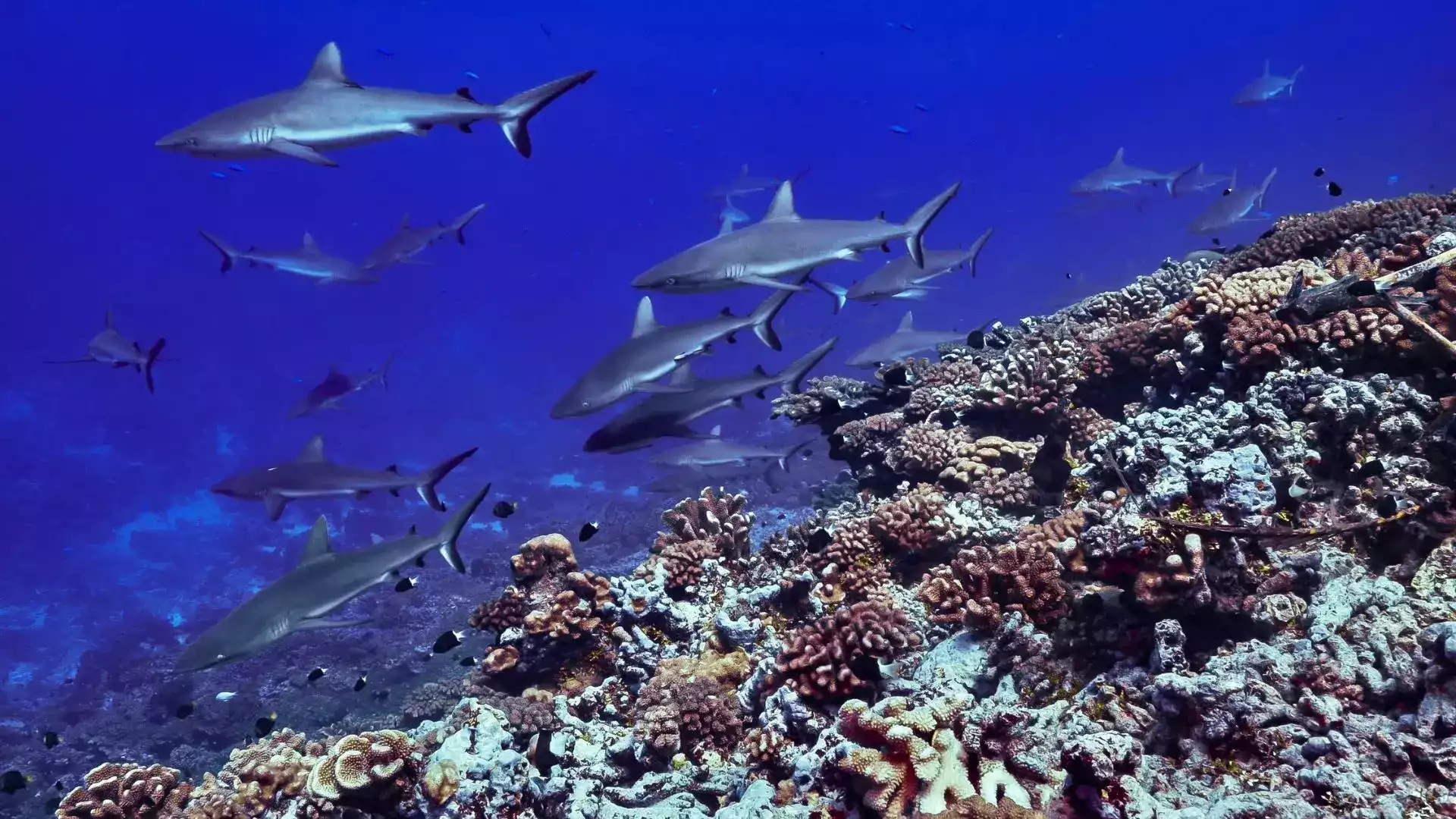
Grey reef sharks in the South Pass of Fakarava — the Tumakohua shark wall is one of the most legendary dives in the world.
Snorkeling in Fakarava — Lagoon Tours with Rotoava Excursion
Lagoon snorkeling tours — Rotoava Excursion
We did our lagoon tours with Rotoava Excursion, and we recommend them without hesitation. Brand new comfortable boat, a passionate guide who takes the time to explain the marine ecosystem, the history of the village and the atoll's wildlife throughout — real added value compared to going out alone. Captain Tamatea and Paui make every day an unforgettable experience — humour, warmth, little personal touches for every passenger. Music on board from the moment you set off.
The South day covers 3 unmissable stops: the South Pass of Tetamanu (snorkeling above the shark wall), the Pink Sand beach (a true postcard), and the Hirifa beach — with BBQ, weaving workshop and coconut bread baking on the captain's family motu. His parents live there year-round — an invitation into their home that makes this excursion unique. Option: add a dive in the South Pass for certified divers.
The North Tour explores the Blue Lagoon and the Teahatea Green Lagoon — two lagoons with crystal-clear turquoise water, snorkeling stops teeming with fish, and a BBQ included. Perfect for those who want to discover the north of the atoll without a scuba tank.
"A fabulous day with no wasted time. The wonderful Paui is passionate and made a huge contribution to making this excursion a success. Genuine sharing, fascinating insights into the history of Tetamanu village, humour, little personal touches for everyone. An enchanting stop at the Pink Sand beach, an invitation to make coconut bread, and an excellent, generous ma'a on the captain's family motu at Hirifa. Mauruuru roa!" — Traveller review, Rotoava Excursion ⭐⭐⭐⭐⭐
Rotoava Excursion — two formats available (South Tour and North Tour), brand new comfortable boat, excellent guide, detailed explanations throughout on the history and nature of Fakarava. Dive option available on the South Tour for certified divers. Book in advance, especially in high season.
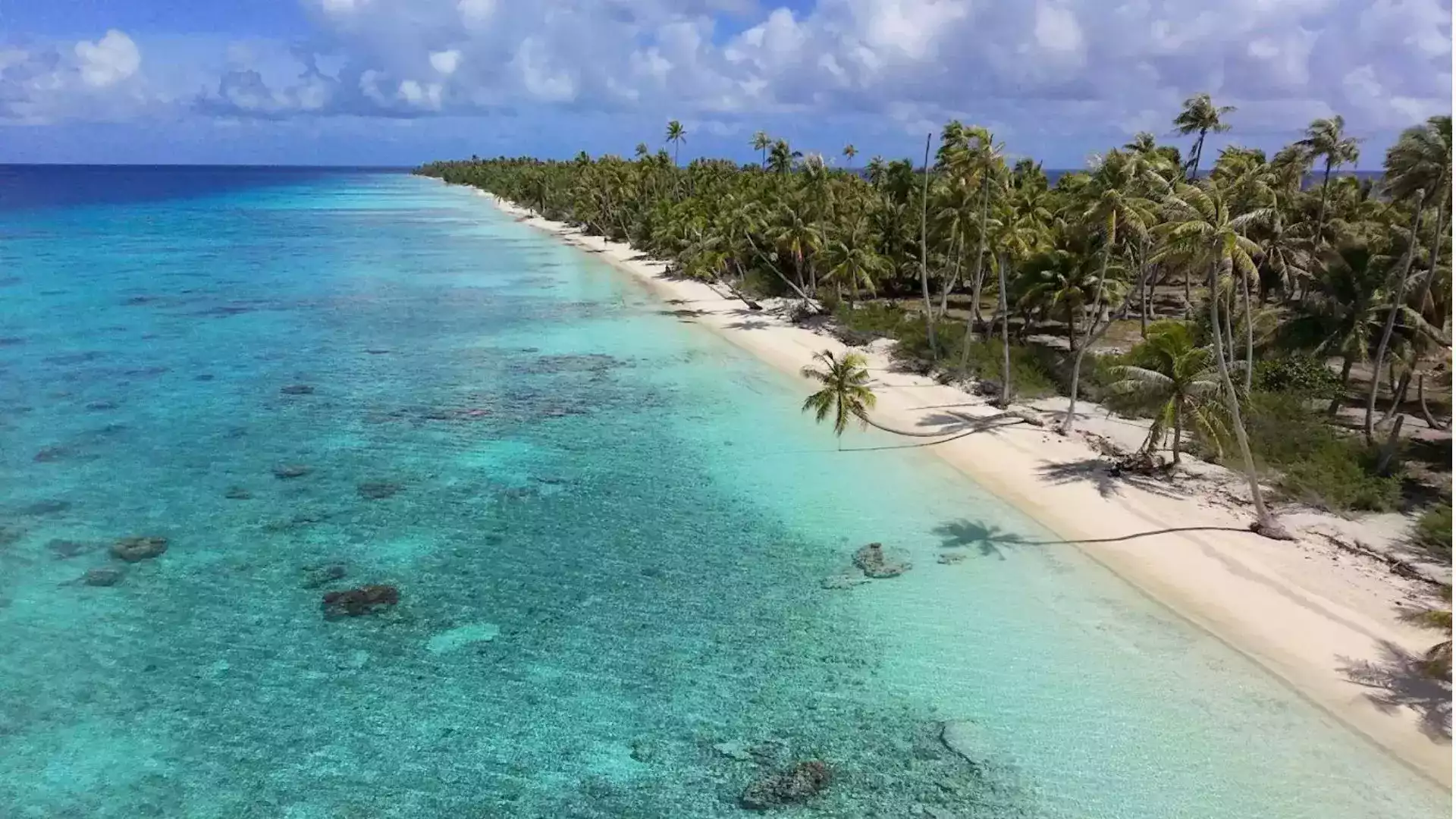
PK9 beach in northern Fakarava — one of the most spectacular snorkeling spots on the atoll.
Honeymoon Honeymoon in French Polynesia — Complete Guide 2026 Tahiti, Moorea, Bora Bora, Fakarava — planning the perfect honeymoon in French Polynesia.Pink Sand Beach Fakarava — Wild Motu
Pink Sand excursion — on the way back from Tetamanu
The Pink Sand beach is one of the most photographed spots in the entire Tuamotu archipelago. A wild motu with a delicately rose-tinted sand beach, formed from coral fragments and shells — a colour you'd think was retouched in photos, but is entirely real. The contrast with the turquoise lagoon and the deep blue ocean is breathtaking.
The spot is generally included on South Pass excursions, on the way back from Tetamanu — confirm this with your operator before departing. It's also here, close to the motu, that dolphins are frequently spotted from the boat, for an absolutely incredible sunset experience.
Visit in good weather only to make the most of the pastel colours. Confirm with your South excursion provider that the Pink Sand stop is included. Dolphins are often spotted nearby at sunset — one of those magical moments Fakarava saves for those who take their time.
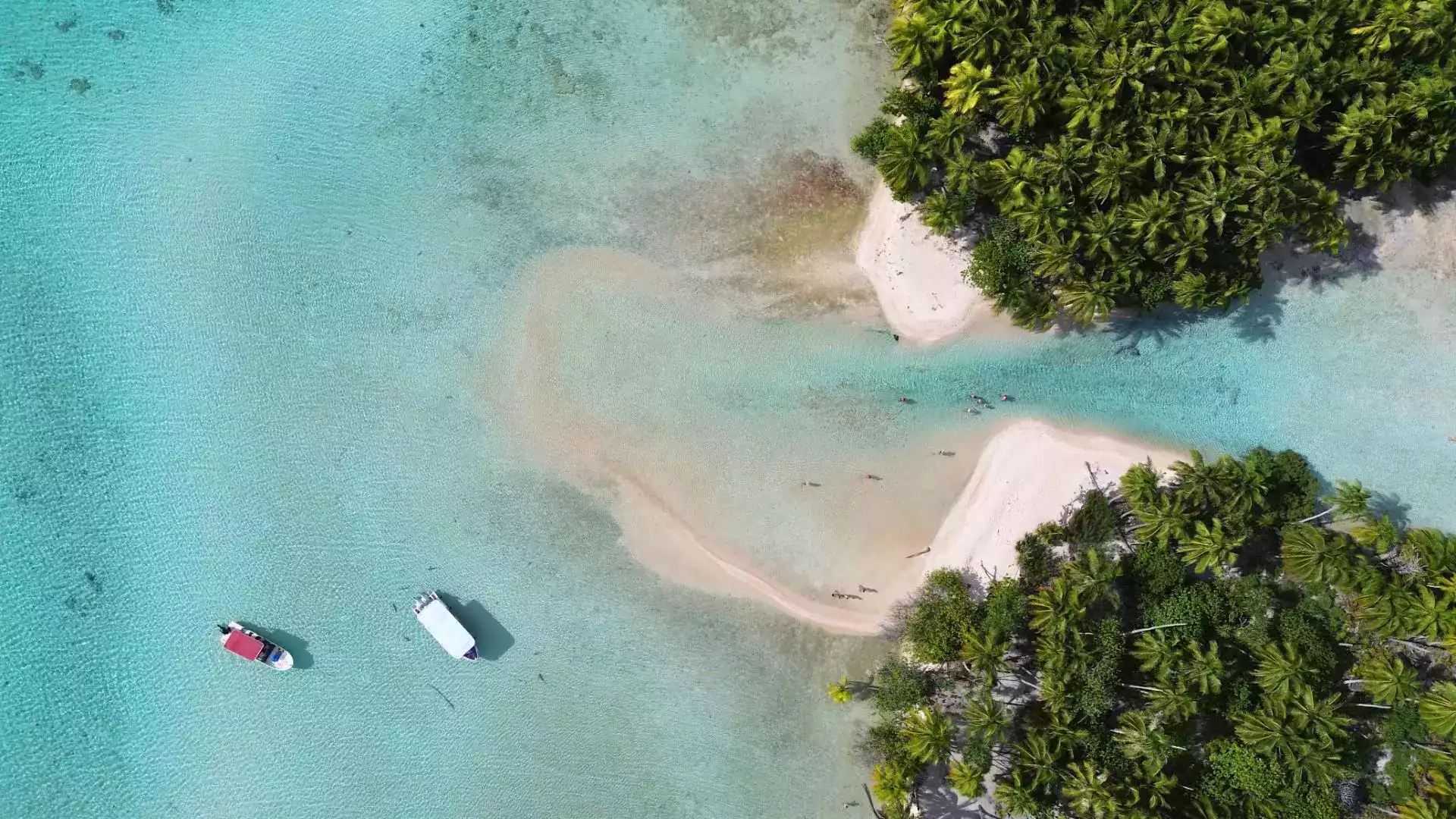
The Pink Sand beach of Fakarava — one of the most photogenic spots in the entire Tuamotu archipelago.
Cycling, PK9 Beach & Rotoava Village — Fakarava at its own pace
Cycling the atoll — PK9, fishermen's dock & lagoon
Fakarava is best explored by bike. It's an atoll frozen in time — an island that moves at its own rhythm, far from the hustle of the high islands, where even the main road tells a story. And what a story: this impeccably smooth concrete road, the finest road in all the Tuamotu, was built in anticipation of President Chirac's visit. He never came. But the road remained — and it now serves as a beautiful promenade between the lagoon on the west side and the ocean on the east, by bike or on foot.
From Rotoava, you hop on a bike and explore at your own pace. First unmissable stop: PK9 beach, just behind the airport. Exceptional. One of the best swimming and snorkeling spots in northern Fakarava — crystal-clear turquoise water, white sand, and a completely wild atmosphere. Accessible by bike from the village, it's the kind of address that Fakarava regulars quietly keep to themselves. We spent a whole afternoon there.
We also recommend stopping at the fishermen's dock — a wonderful spot to chat with locals, watch the day's catch come in, and get a feel for daily life on the island. The fishermen are warm and open, and a conversation at the dockside can be worth as much as any organised excursion. It's where you take the real pulse of Fakarava.
Worth noting: Fakarava is one of the best-connected islands in the Tuamotu, with luxury cruise ships (like the Paul Gauguin or Aranui) calling in regularly — a sign of its appeal while remaining a protected UNESCO atoll.
Most accommodations provide bikes free of charge or for a few euros. The road is paved and well maintained. Allow at least half a day — a full day if you want to do PK9 + the fishermen's dock + the lagoon-side walk at sunset.

PK9 beach in northern Fakarava — behind the airport, one of the most exceptional spots on the atoll.
Pearl Farm Visit in Fakarava — Havaiki
Havaiki pearl farm — lottery & grafting visit
We particularly recommend the visit to the Havaiki pearl farm — a cultural and playful experience unlike anything else we've found in French Polynesia. The farm visit itself is free: you discover the complete grafting process for pearl oysters, how pearls form, how they're harvested, and the different quality grades. Clear, fascinating explanations — a genuine marine biology lesson in an exceptional setting.
And if you want to leave with a one-of-a-kind pearl, there's the lottery: for around €35, you choose an oyster at random, and the farm opens it in front of you. Whatever quality pearl is inside — small or large, round or baroque, pale or dark — it's yours. It's like a raffle, and every opening is a moment of genuine suspense. We've seen absolutely stunning pearls come out of this lottery.
The visit takes place at 9am — call ahead to confirm your attendance. If you don't want to do the lottery, the farm visit is free and well worth the trip.
Don't skip the lottery — even if you're not sure you want to buy a pearl. Watching an oyster open live in front of you, and leaving with "your" unique pearl, is genuinely memorable. And at €35, it's one of the best souvenirs you can take home from Fakarava.
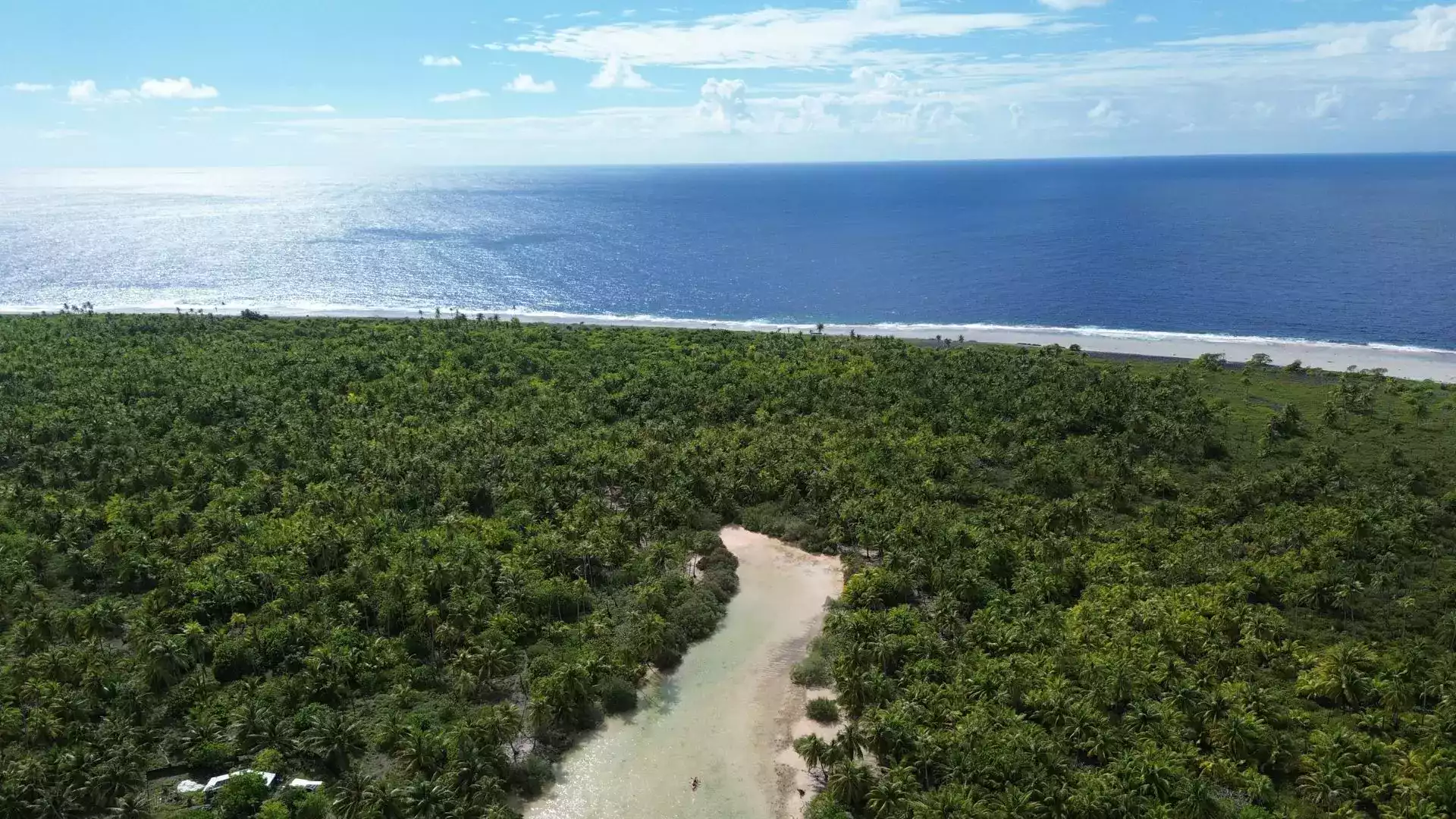
The Tetamanu motu from the South Pass — at the end of the world, accessible only by boat from the north.
The Coral Church of Tetamanu — South Fakarava
Notre-Dame-de-la-Paix Church — Tetamanu
At the end of the world, in the village of Tetamanu at the southern tip of Fakarava, stands a church built entirely from coral blocks — one of the most moving monuments in French Polynesia. Built in the 19th century by the first missionaries, it's now a listed historic monument. The village of Tetamanu is almost deserted, timeless, without road access, at the very end of the world — a few families, some small rustic guesthouses, and an absolute silence you won't forget.
The visit to Tetamanu takes place on the South Pass day trip — your guide or dive centre typically includes a stop at the village and church after the dives. One of the most powerful cultural moments on the atoll.
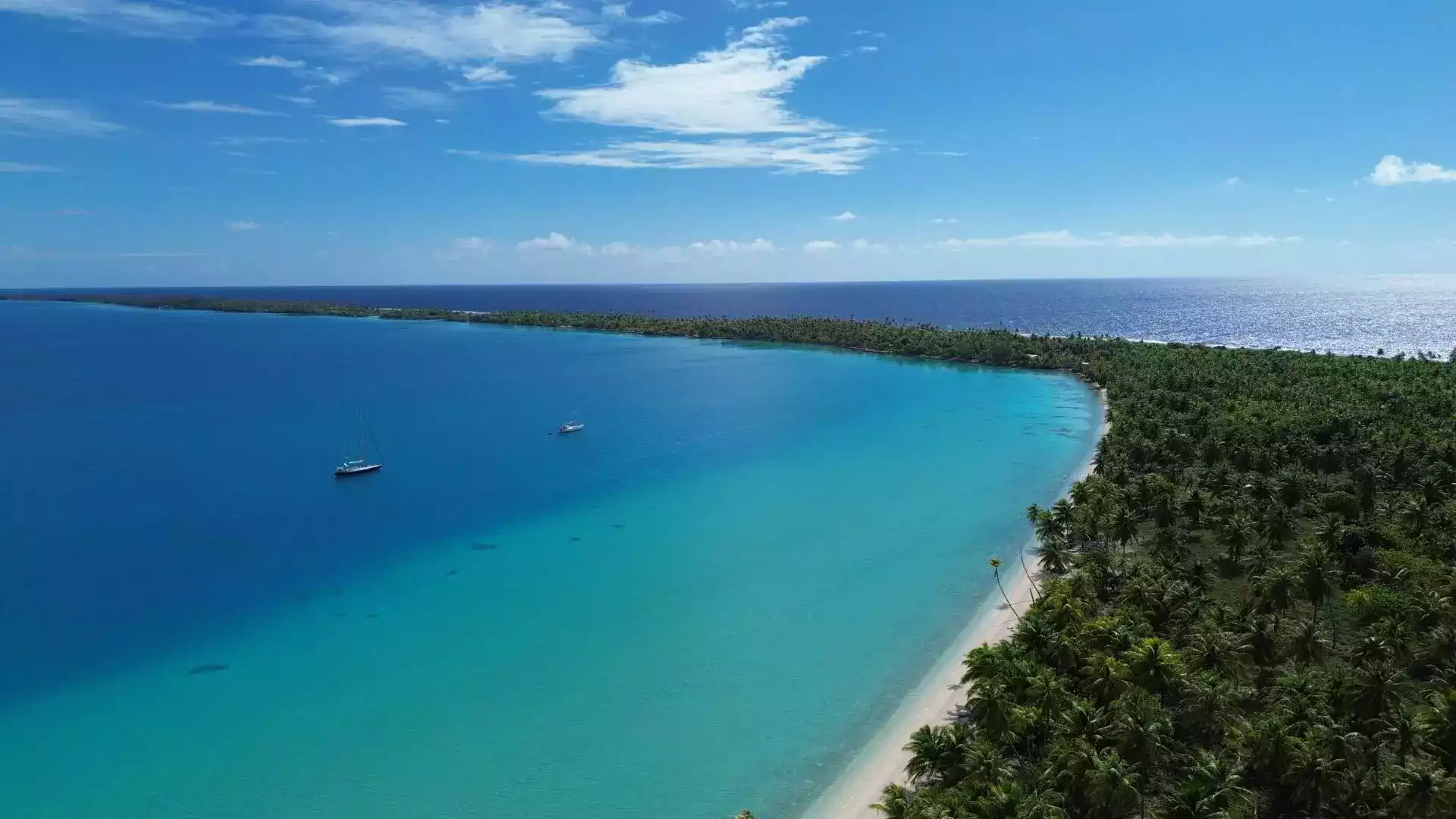
Lunch on the Tetamanu motu during the South Pass day trip — a moment of absolute calm between two legendary dives.
The lagoon of northern Fakarava — crystal-clear turquoise waters, perfect for snorkeling and swimming.
Best Time to Visit Fakarava — Seasons & Marine Calendar
Fakarava can be visited year-round. Grey reef sharks are present permanently in the South Pass. Diving is possible in all seasons. But timing has a major impact on the experience — and on the budget.
In June, giant groupers reproduce in the South Pass of Fakarava. A spectacular natural phenomenon, witnessed by very few divers. Exact dates vary each year — contact local dive centres before booking. It's also the start of high season: book very early.
The most sought-after period. Accommodation, dive centres and excursions fill up months in advance. Higher prices, fewer availability. Book at least 6 months ahead if you're coming in this period. Fakarava is the most expensive of the three atolls (Tikehau, Fakarava, Rangiroa) for activities and diving — even more so in high season.
Quieter, fewer people, more accessible prices. Grey reef sharks are still there. We went out of season and had no trouble finding availability — in high season, it's mission impossible. Low season is our preferred Fakarava experience.
No specific season for grey reef sharks in the South Pass — they're present permanently. On a well-organised South Pass day trip, the chances of seeing them are very high.
Where to Stay in Fakarava — Our Recommendations
Havaiki Lodge — a great spot in the north, with a snack bar right on the water — perfect for lunch, even if you're not staying there. Excellent half-board meals, without doubt the best table in the north. Several bungalows available, great for groups.
Fakarava Lodge — run by Sidonie, an excellent budget option. Good atmosphere, well-located for diving and excursions, solid value for money. This is where we stayed during our group trip of eight. The 2-person and 4-person bungalows are ideal for groups. Sidonie's cooking is excellent — the best food in the north.
In the south — Chez Sabrina (Tetamanu) — also known as "Camping Fakarava Tetamanu chez Sab". A small, rustic guesthouse right at the South Pass, at the very end of the world in the historic village of Tetamanu. Simple, generous cooking in a unique setting. Our favourite for lunch on the South Pass day trip.
Fakarava has few accommodation options and they fill fast. In high season (June–September), book at least 6 months in advance. In low season, 2 to 3 months is generally enough.
Practical Information — Fakarava
North or South — where to stay? The key question
This is the first question to answer before you go. Fakarava is a large atoll — think of it as two distinct destinations, separated by 1h15 to 1h30 by boat.
The north (Rotoava) is more developed: most of the accommodation, restaurants, dive centres, activity providers, the airport, car and bike rentals. This is where most people stay, and the South Pass is done as an organised day excursion from here. The most practical and common option.
The south (Tetamanu) is almost deserted, with a handful of small rustic guesthouses, a remote end-of-the-world atmosphere, no road access. Staying in the south is a radically different experience — more immersive, wilder, more contemplative. But the offer is very limited and there's not much to do beyond diving and watching the world go by. Our recommendation: stay north, do the South Pass as a day excursion.
How to get to the South Pass from the north
Important to understand before you go: the airport is in the north, near Rotoava — and the South Pass is at the opposite end of the atoll. The north and south are not connected by road — only by boat. Two options:
You depart in the morning from the north with Rotoava Excursion or your dive centre, spend the full day (dives, snorkeling, motu lunch), and return in the evening. The most practical and most common solution for the vast majority of travellers.
Some guesthouses offer a boat transfer to the South Pass for a few nights — around €120 return per person. This is an add-on, budget for it. You then spend a few nights at Tetamanu before returning north for your flight home.
3 nights: stay north and do the South Pass as a day excursion — the simplest and most practical option. 5 nights or more: 3 nights north and 2 nights south — the ideal combination to experience both sides of Fakarava. North and south are not connected by road — only by boat. North: hotels, restaurants, activities, airport, cars, bikes. South: total wilderness — no road, a handful of small rustic guesthouses and absolute silence.
How to get to Fakarava
Air Tahiti and Air Moana serve Fakarava from Papeete — around 1 hour's direct flight. You can also reach it from Rangiroa or from Bora Bora, though the latter usually involves a connection at Rangiroa. Budget around €100 one way from Tahiti depending on availability. Fakarava fits well into a Tuamotu loop: Tahiti → Rangiroa → Fakarava → back to Tahiti, for example.
Sample Fakarava itinerary
Day 1: arrival, cycling, PK9, fishermen's dock. Day 2: North Tour with Rotoava Excursion (Blue Lagoon, Teahatea Green Lagoon, snorkeling, BBQ). Day 3: South Tour (Pink Sand, Tetamanu, Hirifa beach). Day 4: Havaiki pearl farm, lunch, departure.
Days 1 & 2: double dives in the North Pass (morning + afternoon). Day 3: South Pass full day with 2 dives in Tumakohua. Day 4: North Tour or Pink Sand excursion, cycling, PK9. Day 5: Havaiki pearl farm, relaxation, departure.
Where to eat in Fakarava
Dining options are limited — it's a small, isolated atoll. Our main recommendation: go for half-board with your accommodation. Fakarava Lodge, run by Sidonie, offers excellent local cooking — the evening meals are a highlight, easily the best food in the north. For lunch, two addresses we recommend: the Havaiki Lodge snack bar, right on the water — great setting, great lunch option. And on the South Pass day, Chez Sabrina in Tetamanu — simple, generous, in a setting like nowhere else.
Estimated budget for a Fakarava trip
Flight from Tahiti: ~€100 one way · Accommodation: €150–350/night · North Pass diving: €80–110/dive · South Pass full day: €150–250 (boat + 2 dives) · Rotoava Excursion: ~€100/person · Pearl farm lottery: ~€35 · Meals: half-board recommended (€30–50/day). Over 4 nights with 4 dives and 1 excursion, budget €1,200–2,000 per person excluding your Paris–Tahiti flight.
FAQ — Things to Do in Fakarava
Explore the Tuamotu — our complete guides
Tuamotu · Largest atoll Best Things to Do in Rangiroa — Top 9 Activities & Complete Guide 2026 Reef Island, Blue Lagoon, Green Lagoon, dolphins, diving — the most complete atoll in Polynesia. Tuamotu · Pink atoll Things to Do in Tikehau — Top Activities & Complete Guide The most intimate and wild atoll in the Tuamotu — snorkeling, diving and deserted beaches. Tuamotu · Secret atoll Things to Do in Mataiva — Top Activities & Guide The most preserved atoll in the Tuamotu — a mosaic lagoon unique in the world. Tuamotu · Black pearls Things to Do in Manihi — Complete Guide & Activities The black pearl capital of French Polynesia — pearl farms, diving and turquoise lagoon. French Polynesia · Sunset Sunset in French Polynesia — Best Spots & Tips Discover the best places to watch spectacular sunsets across the islands of French Polynesia. Tuamotu · Travel Guide Tuamotu Islands — Complete Travel Guide to French Polynesia Discover the Tuamotu Archipelago — its most beautiful atolls, turquoise lagoons, diving spots and must-see islands. Whale watching Whale Watching in Tahiti — Tours & Season 2026 Humpback whales in French Polynesia — the best tours from Tahiti and Moorea, July to November. Plan your trip Best Travel Agencies in French Polynesia — Our Selection Our curated selection of trusted local agencies to organise your Polynesia trip from A to Z.